
What is a sinus lift, and why is it proposed?
A sinus lift adds bone to the back of the upper jaw so that an implant can be placed there. The sinuses in the upper jaw are air-filled spaces next to the nose, above the upper back teeth and below the eye1. Their bony floor is lined by a thin membrane. In a sinus lift, this lining is gently raised and graft material is placed in the space beneath it. Over time, new bone forms there.
It is proposed when upper back teeth have been lost. There is then often not enough bone below the sinus for an implant of the planned length. After an examination and a 3D scan, your dentist advises whether you need one. Whether to go ahead is your decision. A sinus lift is a planned, elective operation, and there are alternatives, including a shorter implant, a denture, a bridge or leaving the gap.
The treatment is carried out at our clinic in Antalya, Turkey, by the clinic's dentists; on this page "we" means that clinic. Your written plan gives the clinic's legal name, as the party you contract with, and names the dentist who treats you. A sinus lift can lengthen implant treatment, add visits to Antalya and limit when you can fly. The figures on this page come from published studies and from one UK hospital leaflet, not from our own records. The leaflet is written by Cambridge University Hospitals NHS Foundation Trust, in England, for its own patients.
- A sinus lift raises the lining of the sinus and places graft material beneath it. This makes room for an implant at the back of the upper jaw. It is an elective operation, and there are alternatives.
- It is done through a small window in the side of the jaw. When some bone is left, it can be done through the hole prepared for the implant. The implant goes in at the same time or in a later operation, depending on the bone you have.
- Published studies looked at side-window sinus lifts where 6 millimetres of bone or less remained. Implant loss was low: 0.43 per cent per implant per year. These are not our own figures.
- A tear in the sinus lining during surgery is common and is usually repaired in the same session. In a review, implant survival was similar when the tear was repaired.
- A 2023 review suggests waiting at least two, and ideally six, weeks after a sinus lift before flying. That assumes no pain, swelling or bleeding. In England and Wales, NHS free repair does not cover work done abroad.
Who may need a sinus lift
When a sinus lift may be considered
- Upper back teeth have been lost, and the bone below the sinus is too shallow for an implant of the planned length. The UK hospital leaflet notes that many people who have lost their upper back teeth do not have enough bone for implants1.
- An implant at the back of the upper jaw is the option you prefer, after the alternatives have been explained.
When another step comes first
- Sinus problems. Sinusitis, a blocked nose or previous sinus surgery are assessed first. An active sinus infection is treated before the operation. If symptoms or the scan call for it, an ear, nose and throat assessment is requested.
- Infection in the mouth and untreated gum disease. These are treated first.
- Uncontrolled medical conditions. If blood sugar is unstable or there is an undiagnosed problem, surgery is postponed.
What is associated with higher risk
- Smoking. The UK hospital leaflet says that the risk of the graft failing is higher in some people, especially in smokers1. Smoking is also associated with poorer wound healing.
- Bone-strengthening medicines (such as bisphosphonates or denosumab), diabetes, a history of gum disease, and radiotherapy to the head and neck. Each needs a careful look at your medical history, and sometimes planning with your own doctors. What studies report for each is set out on the bone grafting page. Tell us about every medicine you take, including any blood thinner. Do not stop your blood thinner unless your dentist or doctor tells you to2. Do not stop any other medicine without asking the doctor who prescribed it.
Suitability is decided by an examination, a 3D scan and your medical history. An assessment made from photographs or X-rays you send is preliminary, not a treatment plan.
Imaging and assessment before a sinus lift
Before a sinus lift is planned, the dentist examines your mouth and takes your medical history. A 3D scan (cone beam CT) shows how much bone is left below the sinus and the shape of the sinus floor. It also shows the lining and any signs of sinus disease. Recommendations on 3D scans in implant dentistry say a scan could be justified for diagnosis and planning before surgery3. The dose of a 3D scan is generally higher than that of ordinary dental X-rays and lower than that of a medical CT scan4. It also varies widely between machines and settings. Ask for a copy of the scan; it is part of your record.
The teeth next to the sinus are checked as well. Sinus symptoms and toothache can overlap: the NHS lists toothache among the symptoms of sinusitis5. A review looked at sinus infections from teeth that spread beyond the sinus. The most common source was infection at the root tips of upper molars6. Such a tooth is treated before a sinus lift.
We also ask about sinusitis, a blocked nose, previous sinus surgery and conditions that stop the sinus draining. With your permission, we write to your GP or hospital doctor if needed. The plan is given in writing, with the approach, the graft material, the reasoning and the alternatives.
Techniques and graft materials
There are two main approaches. Which one suits you depends mainly on how much bone is left below the sinus.
Through a window in the side of the jaw
This is the lateral, or external, approach. A small window is opened in the side wall of the jaw, on the cheek side. The sinus lining is lifted, graft material is packed beneath it, and a covering membrane may be placed. Where there is no usable bone, the UK hospital leaflet says the implant is not normally placed until the bone has healed1. That means a second operation. Where some bone is left, the implant can be placed in the same operation.
Through the hole prepared for the implant
This is the internal, or crestal, approach. In the technique the leaflet describes, the floor of the sinus is gently tapped upwards through the implant site, and graft material may be added. The implant is placed at the same time. The leaflet describes it for cases where only about 3 millimetres of extra bone height is needed1. Ask which technique and instruments your dentist would use.
The study figures on this page for implant loss and for tears in the lining come from side-window sinus lifts. They do not describe the approach through the implant site.
Graft materials
Graft material can be your own bone, or it can be prepared from a human donor or an animal source (cattle or pigs). It can also be fully synthetic. The graft creates a scaffold for your own bone to grow into1. If your own bone is used, ask where it will be taken from. If it is taken from a second site, a second wound is opened, with its own pain and swelling. Covering membranes can also be of animal origin. For some patients this is decisive, for religious or personal reasons. Before you consent, you are told which graft and which membrane will be used and where they come from.
No graft material has been shown to lower implant loss. A review of sinus floor augmentation found no significant difference7 in implant loss between your own bone and bone substitutes. It does not show that every material works equally well. If a material is presented to you as "the best", ask for the reasoning on your own scan.
A sinus lift without graft material has also been reported. A review of 16 articles reported implant survival at 48 to 60 months of follow-up. It was 96 per cent without graft material8 and 99.6 per cent with a biomaterial, counted per implant. These are published figures, not our own. The review's published summary reports no direct statistical comparison of these two rates; we could not read the full text. So neither approach can be counted as a proven advantage.
Instruments
The window can be cut with rotating instruments or with an ultrasonic (piezoelectric) device. A review of 69 studies of mixed design reported tears in 24 per cent with rotating instruments and 8 per cent with the ultrasonic device9. Its authors note that studies without a comparison group were included. A review of four randomised trials found fewer tears with the ultrasonic device, but the difference was not significant10. The evidence was too weak to confirm it. The ultrasonic device added an average of 3.43 minutes to surgery. So it is not established that either instrument prevents tears.
| Side window (lateral) | Through the implant site (crestal) | |
|---|---|---|
| How the sinus floor is reached | A small window in the side wall of the jaw | Through the hole prepared for the implant |
| When it is used | Little or no usable bone below the sinus, or a larger gain is needed | Some bone is left and only a small gain is needed |
| When the implant goes in | Same operation if some bone is left; otherwise a second operation after healing | Usually in the same operation |
| What the published reviews on this page cover | Implant loss and tears in the lining | Not covered by those figures |
| Known problems | Tear in the lining, infection, graft exposure or loss, sinusitis, numbness of the cheek | Tear in the lining, infection and the other problems under "Risks and complications"; ask how often in your dentist's hands |
Anaesthesia and how the operation runs
A sinus lift is usually done under local anaesthetic, with you awake. The UK hospital leaflet says sedation or general anaesthesia is used only when surgery will be difficult or when multiple procedures are required1. It also says the procedure may take 45 minutes to two hours1, depending on its complexity. At our clinic, conscious sedation can be added if you want it and it suits you. Whether it suits you is assessed first from your medical history and medicines.
If you have sedation, note the UK national standard for conscious sedation in dentistry. It requires an escort for every form of sedation other than inhalation sedation in adults11. If an escort cannot be arranged, treatment under sedation is not carried out. If you are travelling alone, raise this before you book. More is on the sedation and anaesthesia page.
The number of visits, the gaps between them and the waiting periods are given in your written plan; they vary from patient to patient.
Examination, 3D scan and medical history
The scan measures the bone below the sinus and shows the sinus lining. We ask about smoking, diabetes, gum-disease history, medicines, radiotherapy and sinus problems.
Preparation
Any infection in the mouth or the sinus is treated first. Blood sugar control and your medicines are reviewed. If you are having sedation, the escort and fasting rules are explained in advance.
Surgery
A cut is made in the gum over the area. In the side-window approach, a small window is opened in the bone and the lining is lifted. Graft material is placed beneath it and, if needed, covered with a membrane. In the approach through the implant site, the sinus floor is raised through the hole prepared for the implant. The gum is closed with stitches.
If the lining tears
A tear is usually repaired in the same session. Depending on its size and how reliable the repair is, the procedure may be stopped and planned again once the lining has healed. You are told before surgery what this would mean for your plan and your travel.
Healing and bone formation
If you have stitches that need removing, ask when and where that is done, and whether it falls before your flight home. New bone then needs time to form. How long depends on the amount of bone needed, the graft material and how you heal. Your own healing time is given in your written plan.
Placing the implant
If enough bone is left, the implant may be placed in the same operation as the sinus lift. Otherwise it is placed in a second operation once the bone has formed. The plan is made before surgery and confirmed during it, from how firmly the implant holds in the remaining bone.
Crown or bridge
Once the implant has fused with the bone, the crown or bridge is made and fitted. An X-ray and measurements around the implant are recorded as a baseline for later reviews.
Implant at the same time, or later?
Whether the implant goes in during the sinus lift or in a later operation depends mainly on how much bone is left below the sinus. It also depends on how firmly the implant holds when it is placed. A review of sinus floor augmentation found no significant difference7 in implant loss between same-session and later placement. That does not show the two routes are equivalent for every patient.
How long the graft needs before an implant, or before the teeth are fitted, varies. The UK hospital leaflet gives its own patients a figure for the side-window sinus lift. It says the graft can take 4 to 9 months1 to join with the patient's own bone before implants are placed. The time depends on the amount of bone needed and the graft material used, it adds. Another passage gives four to 12 months1 for bone to grow into the graft. From the sinus lift to the finished teeth, it gives six to 12 months, sometimes longer1. These figures describe that hospital's practice. They are not a rule, and they are not our timetable. Your own waiting time is set after the examination and given in your written plan. Ask how it compares with these figures, and why. Do not shorten it to fit travel plans.
Visits to Antalya, and when you can fly
How many visits
Implant treatment usually needs at least two visits to Antalya, because a healing period separates the surgery from the final crown or bridge. A staged sinus lift adds a step. The sinus lift comes first, the implant follows once the bone has formed, and the crown or bridge once the implant has healed. Your plan states how many visits you need, what is done on each, how many days each one takes and when you can fly. Have it in writing before you book travel.
The examination in Antalya may change the plan made from your X-rays. A sinus lift may turn out to be unnecessary, or a staged one may be needed instead of a same-session one. Ask before you travel what you would pay in that case.
When you can fly
A 2023 review suggests waiting at least two, and ideally six, weeks12 after a sinus lift before flying. After an implant alone, it suggests at least 72 hours. Both times assume there is no pain, swelling or bleeding where you were treated. The authors say the research is limited and comes mostly from military aviation. They call these intervals a starting point for the dentist's decision. Treat them as the start of a conversation with the dentist who treated you, not as clearance. Ask before you book how long you will stay in Turkey after the operation, and who decides when you can fly.
Between visits, at home
The NHS website for England advises you to discuss your plans with a GP13 before making any final decisions about travel or medical arrangements. The GDC says it is always a good idea to speak to your own dentist14 before treatment abroad. They may be able to advise you from your dental history. Ask now whether they will see you between the visits and afterwards, and whether you can go to them if something goes wrong. If you do not have a regular dentist, find one, NHS or private, before you travel. A check with a dentist in the UK between the stages can be written into your plan. If so, ask for the records of the first visit before you fly home. Some dentists may not want to take on treatment that is in progress. So the plan also says where to turn if a problem arises in between.
Risks and complications
Risks
The figures in this section come from published studies and from one UK hospital leaflet, not from our own records. The leaflet does not say where its figures come from, or whether they count patients or operations.
- A tear in the sinus lining. This is the main risk during the operation. A review of 10 studies looked at side-window sinus lifts with graft material. The average tear rate was 29.42 per cent15. The earlier studies it cites report 16 to 56 per cent. The UK hospital leaflet gives a 19 per cent chance with the side-window approach and 3.8 per cent through the implant site1. It does not say where these figures come from. A tear is usually repaired in the same session. If the repair is not reliable, the procedure may be stopped and done again once the lining has healed. The leaflet says that healing usually takes a few months. In the review, implant survival was 97.1 per cent after a repaired tear and 97.7 per cent with no tear; the difference was not significant. Some of its studies describe problems after surgery, such as sinusitis. The review does not compare these problems between torn and intact linings, so it does not show that a tear has no drawbacks.
- Infection. Infection can develop in the graft or the sinus. The leaflet gives a 2.9 per cent chance with the side-window approach and 0.8 per cent through the implant site1. A longer-term infection may mean the graft has to be removed.
- Sinusitis. Inflammation of the sinus can follow the operation. We have found no sourced figure for how often it happens after a sinus lift.
- The graft not taking. Stitches can open and the graft can become exposed; the leaflet gives 3 per cent for graft exposure1. Part or all of the graft may be lost, or too little bone may form for an implant. The leaflet gives 1.9 per cent for no graft remaining after a side-window sinus lift, and 1 per cent for too little bone. Small hard particles may also come out through the gum in the first weeks.
- Numbness. The cheek, upper gums and teeth on the treated side may feel numb after surgery. The leaflet says this is usually temporary but, very rarely, can be permanent1.
- An opening between the mouth and the sinus. The leaflet lists this among the rare but serious problems.
- Other effects. Swelling, bruising and pain are expected in the first days, and a nosebleed can happen. Your sinus may feel full or blocked for some weeks1. The leaflet lists vertigo, a spinning kind of dizziness, as rare and temporary1. Tell us if it happens.
- A limit on flying. A 2023 review suggests waiting at least two, and ideally six, weeks12 after a sinus lift before flying. That assumes no pain, swelling or bleeding. This affects how long you stay in Turkey after the operation.
Benefits
- The aim is to gain the bone an implant needs at the back of the upper jaw. The implant can then be placed at the planned length. Sometimes the bone gained is not enough, and a further procedure or a different plan is needed.
- Implant loss after sinus floor augmentation has been reported as low. In 11 prospective studies with at least five years of follow-up, annual loss was 0.43 per cent per implant7. In these studies the remaining bone height was 6 millimetres or less, and the side-window technique was used.
These rates come from published studies, not from our own records. They are outcomes observed in studies, not promises, and they are averages of studies from different countries and different groups of patients. What happens in your case depends on your bone, your sinus, your habits and your care.
Alternatives, and their limits
A sinus lift is not the only way to replace upper back teeth. Your dentist should discuss each option with you, including leaving the gap.
- A shorter implant. This needs enough bone without a sinus lift. The UK hospital leaflet says the risk of implant failure increases as the implant length decreases1. It calls the success rates good, but says complications are potentially more likely than with longer implants placed after a sinus lift. Several short implants might be an alternative, it adds. A Cochrane review looked at the shrunken (resorbed) lower jaw. There, short implants appear to be a better option16 than building the bone up in height. That finding concerns the lower jaw, not the upper jaw.
- Fewer implants, placed further forward or at an angle. Implants placed in front of the sinus, or angled alongside it, can avoid a sinus lift. Grafting may still be needed around the other implants, the leaflet notes. More of the chewing force then goes through fewer implants1. It says this can potentially lead to more frequent problems with the implants and with the bridge or denture. In a jaw with no teeth, this is the idea behind the designs on the All-on-6 page.
- Zygomatic implants. When the upper jaw has very little bone, long implants anchored in the cheekbone may be considered. A Cochrane review describes the procedure as technically demanding17 and notes that it may be associated with serious complications. Of the problems in the tissues around these implants, inflammation of the sinus is the one reported most often18. The UK hospital leaflet says the surgery is more complicated than ordinary implant placement, and not all surgeons can provide it1. See full-mouth dental implants.
- A bridge on your own teeth. A conventional bridge needs the neighbouring teeth to be reduced to hold it. An adhesive bridge is bonded to a neighbouring tooth and needs very little or no grinding. A bridge usually replaces only one or two teeth1. The options are compared on the dental implants page.
- A removable denture. It needs no surgery.
- Leaving the gap. If you have enough working teeth, the UK hospital leaflet notes that it might be better to accept the gap1.
Before you decide, you can ask a dentist in the UK for an independent opinion. Ask whether you need a sinus lift and what they think of your plan. Ask too whether to have the treatment in the UK instead. You can say no, or ask to stop, at any stage, including after the examination in Antalya.
Recovery and precautions
What is usual
The UK hospital leaflet describes normal healing after a sinus lift. Swelling is at its worst after two days1, and bruising over the cheek can spread to the lower jaw. It says patients can expect to feel back to normal after two to three weeks. Pain is usually controlled with simple painkillers such as ibuprofen and paracetamol. Your sinus may feel full or blocked for some weeks, and a nosebleed can happen.
Protecting the sinus
- Do not blow your nose. The UK hospital leaflet advises not blowing your nose for two weeks1 after the operation. Follow your own written instructions for how long.
- The leaflet lists bony material that may have been dislodged after sneezing or blowing your nose1 as a reason to contact the surgeon. Ask whether your written instructions add other rules, for example on sneezing or drinking through a straw.
- Take the medicines you are prescribed. The leaflet lists antibiotics and decongestants1 among the medicines that may be prescribed after the operation.
- Choose soft, lukewarm food, and avoid chewing on the area. Keep brushing; clean the area gently, the way your dentist shows you.
- Smoking is associated with poorer healing. At the least, do not smoke during the healing period.
- If you had sedation, do not drive or operate machinery for as long as the sedation team tells you. Before you leave the clinic, you and your escort should have written aftercare instructions and know how to reach the clinic, including out of hours.
Later reviews
When the crown or bridge is fitted, an X-ray and pocket measurements around the implant are taken as a baseline19. Later changes are judged against that record. Much of your later care will be with a dentist near your home in the UK. Take your baseline X-ray and measurements home with you, and agree before you travel who will see you for reviews.
When to seek help
After surgery, or at any time later, contact us if any of the following happens. The UK hospital leaflet gives similar reasons to contact the surgeon1.
- Swelling or pain that gets worse after the second day, or pain that does not ease over time
- Bleeding that does not stop, or bright red bleeding that keeps flowing
- A high temperature, or feeling generally unwell
- A bad smell or pus from the area, stitches opening, or graft material showing through the gum
- You think graft material has come loose after sneezing or blowing your nose
- Discharge from the nose, a blocked nose or pain over the cheek on the treated side that does not settle
- Liquid coming out of your nose when you drink, or air passing between your mouth and nose
- Numbness of the cheek, gum or lip that lasts longer than you were told to expect
Before you fly home. Have the area checked before your flight, and take written instructions for your stitches, your medicines and your reviews. If any of these signs starts while you are still in Turkey, tell us before you travel.
Once you are home. Contact us through the route written in your plan. See a dentist near you as well if pain or swelling keeps increasing or bleeding does not stop. Do the same for signs of infection, lasting numbness or discharge from the nose. Do not wait for our reply. If your plan names a dentist in the UK, contact them as well. In England, if you have no dentist or cannot get an emergency appointment, the NHS says to call 111 or get help from 111 online20. They can tell you where to get help, and you may have to pay for the appointment. Elsewhere in the UK, check the local arrangements.
Emergencies. In the UK, call 999 or go to A&E20 if you have any of the signs below. Do not wait for our reply. In Turkey, call 112.
- It is hard to breathe, speak or swallow
- There is a lot of swelling in your mouth, or it is hard to open your mouth
- Your eye is swollen or painful, or your eyesight changes suddenly
- Your neck is swollen21
If a sinus problem appears after you are home
Once you are back in the UK, the first person to see a problem may be a dentist or a GP near you. Plan for that before you travel.
- Sinus symptoms on the treated side. See a dentist first, with your records, and contact us through the route in your plan. Scottish guidance for dentists says that when sinusitis is suspected, a dental cause should be ruled out first22. The NHS website for England covers sinusitis symptoms. It says to ask for an urgent GP appointment or get help from NHS 1115 if you are very unwell. The same applies if painkillers do not help or the symptoms get worse. Tell the GP about your sinus lift and show them your records.
- A graft that does not take. Part or all of the graft may be lost. Once the area has healed, the sinus lift can be repeated, or the plan changed to an option that needs less bone. That may mean another visit to Antalya.
- An implant that fails. Further surgery, another graft or a different restoration may be needed, and that may also mean another visit.
- Who pays. The GDC suggests asking whether work is guaranteed and for how long; it does not set a minimum period itself. Our written remake terms state who pays for further treatment and travel (see "Is the work guaranteed?" below).
What the NHS does and does not do
The NHS Business Services Authority publishes guidance for dentists in England and Wales. It says a patient treated abroad is dealt with like any patient previously treated by another provider. If an NHS practice accepts you, it provides the clinically necessary treatment its NHS contract covers, with your consent. But some entitlements do not apply where another provider did the original work. These are further treatment within two months, free repair or replacement, and a replacement appliance under Regulation 1123. That guidance does not say a sinus lift or an implant will be repaired or redone on the NHS. It covers England and Wales. Scotland and Northern Ireland have their own NHS rules, which this page does not cover; ask the practice you plan to use. The NHS also states that it is not liable for negligence or failure of treatment13 you receive abroad.
Travel insurance
The NHS warns that most travel insurance policies will not cover you for planned treatment abroad13, so you may need specialist cover. Ask your insurer, in writing, before you book.
What the GDC and the NHS suggest you ask
The UK General Dental Council lists thirteen questions14 to ask before dental treatment abroad, and the NHS has its own checklist. Below are the ones that matter most for a sinus lift, each with our answer. Where our answer is a commitment rather than something you can check today, it says so. Ask us the full list, and ask for the answers in writing.
Who will treat me, and how can I check their registration?
We name the dentist who will carry out the sinus lift, in writing, before you commit. In Turkey a dentist in private practice must register with the provincial or regional dental chamber24 within a month of starting. Without it, they cannot practise privately. The Turkish Dental Association's website offers a search of registered dentists by name and province25. Ask us for the treating dentist's registration details. Registration in Turkey is separate from the UK register: the GDC states that only people registered with it can legally practise dentistry in the UK26.
How often do you do this, and what are your complication rates?
The GDC suggests asking how many times the procedure has been carried out, and the success, complication and infection rates14. The figures on this page come from published reviews and a UK hospital leaflet, not from our own patient records. We publish no sinus-lift figures of our own yet, so ask us for them. Ask how many sinus lifts, tears and infections there were, how complications were defined and over what period. Ask which approach the dentist would use for you, and how often they use it.
Is the clinic licensed and regulated?
In Turkey a dental clinic cannot open without a licence or treat patients without an operating permit. It is inspected at least once a year27. To treat international patients, a facility also needs an authorisation certificate from the Ministry of Health28. The Ministry publishes a register of authorised facilities29 that you can check yourself. We give you our authorisation details before you commit. A licence or authorisation is a legal minimum, not a statement about the result of your treatment. The GDC itself cannot guarantee that a regulator like it exists in another country14.
Will I get the plan in writing?
Yes. The GDC says you should be assessed by a qualified dentist before being given a treatment plan and cost estimate14. Your written plan states whether you need a sinus lift and why, and the approach. It says whether the implant goes in at the same time, and gives the alternatives. It names the graft material and membrane and where they come from. It also states what the plan covers and does not cover, and how many visits are needed. A plan made from photographs or X-rays you send is preliminary. It is confirmed after the examination and 3D scan, and we tell you before anything in it changes. You can say no, or ask to stop, at any stage, including after the examination. Ask before you travel what you would pay if the examination shows that the plan does not suit you.
Is the work guaranteed?
The GDC suggests asking whether the work is guaranteed and for how long14. It also suggests asking whether further treatment is included if there are complications, and who pays for extra flights, hotel and remedial work14. Before you commit, we give you our complication route and remake terms in writing. They state what is covered, for how long and what is excluded. They also say what happens if the lining tears and the operation has to be stopped, or if the graft does not take. They state what you must do to keep the cover, such as attending reviews, and who pays for further treatment and travel. Read that document before you decide, rather than relying on the word "guarantee" on any web page.
Is there insurance if something goes wrong?
The GDC list also asks about insurance14. In Turkey a facility treating international patients must take out complication insurance for surgical and interventional procedures carried out in an operating theatre28. That does not by itself tell you whether your sinus lift is covered, so ask which procedures in your plan fall under it. Ask us too, in writing, whether the clinic or the treating dentist holds insurance for complications or errors, and what it covers. Travel insurance is covered under "If a sinus problem appears after you are home" above.
Who do I contact after treatment?
Your written plan names the contact route for questions and problems once you are home, and your review interval. For urgent symptoms, get emergency care where you are first (see "When to seek help" above).
What records will I take home?
The NHS lists exchanging medical records and arranging aftercare back home13 among the things to consider. In Turkey you are entitled to an itemised bill, and on request to free copies of the records of materials, tests and imaging28. You may also examine your file and take a copy30. Before you fly home, ask for your record in a form a UK dentist can use. It should say which approach was used and whether the lining tore. It should list the graft material and membrane, with their brand names and batch numbers, and the implant system if an implant was placed. It should also include your X-rays and scan. A dentist or GP in the UK needs it to look after the area.
What if I am unhappy, and where can I complain?
We give you our written complaints procedure before treatment. A complaint goes to the clinic first; private dental polyclinics, centres and hospitals in Turkey must have a patient rights unit27. If the clinic does not resolve it, you can apply in writing to the provincial health directorate's Patient Rights Board30. The Board decides within thirty days, but it does not assess allegations of medical error. The dental chamber can also open disciplinary proceedings24 against a dentist. Do not expect the UK regulator to settle it. The GDC states that it cannot resolve complaints or help with refunds26; its investigations are about whether dental professionals are fit to practise.
Will the team speak English?
The GDC suggests asking whether the team speaks your language and, if not, whether a translator is provided14. We confirm in writing, before you commit, who will explain the plan, the consent form and the aftercare instructions to you in English.
Warning signs, including for us
The NHS checklist names five signs to think twice about before booking. They are a hard sell, a lack of information, pressure to make a quick decision, no discussion of possible complications, and no mention of aftercare31. Apply them to us too. If you feel pushed to decide quickly, wait.
What determines the cost?
No prices are shown on this page. The main factors in a plan are these:
- The approach, and whether the implant goes in at the same time
- The type and amount of graft material
- Whether a membrane is used
- Sedation
- The number of visits and the review programme
The plan also states what will be done if the lining tears and the operation is stopped, or if the graft does not take. Ask in writing what your plan includes, and who pays for further treatment and extra travel if there is a complication. The Dutch dental association advises counting all the costs, travel and accommodation included32. For you, that means your travel for every visit, the longer stay before you can fly, and reviews with a dentist in the UK.
Have you been told you need a sinus lift?
Send a panoramic X-ray or 3D scan if you have one. A dentist will reply in writing with a preliminary view on whether a sinus lift is likely, which approach may suit you and how many visits are likely. This is not a treatment plan: the plan follows an examination and a 3D scan.
Frequently Asked Questions
Why do I need a sinus lift?
Because the bone below your sinus has been found too shallow for an implant of the planned length at the back of the upper jaw. This often happens after upper back teeth have been lost. After an examination and a 3D scan, your dentist advises whether you need one. You decide whether to go ahead, and there are alternatives, including a shorter implant, a bridge, a denture or leaving the gap.
What is the difference between a side-window and a crestal sinus lift?
In a side-window (lateral) sinus lift, a small window is opened in the side of the jaw and the lining is lifted from there. It is used when there is little bone, and the implant may need a second operation. In a crestal (internal) sinus lift, the sinus floor is raised through the hole prepared for the implant. The implant goes in at the same time. It is used when some bone is left and only a small gain is needed. The study figures on this page come from side-window sinus lifts.
Can the implant be placed at the same time as the sinus lift?
In some cases, yes. It depends mainly on how much bone is left below the sinus and how firmly the implant holds when it is placed. A review found no significant difference in implant loss between placing the implant in the same session and placing it later. That does not mean the two routes are equivalent for every patient. Nobody is promised a single operation.
What happens if the sinus lining tears?
A tear is common and is usually repaired in the same session. Depending on its size and the repair, the operation may be stopped and done again once the lining has healed. In a review, implant survival was similar after a repaired tear and with no tear; the figures are under "Risks and complications" above. That review does not show that a tear has no drawbacks.
Is a sinus lift painful?
It is usually done under local anaesthetic, which numbs the area; conscious sedation can be added if you want it and it suits you. Afterwards, swelling, bruising and soreness are expected in the first days and are managed with painkillers. Pain or swelling that gets worse after the second day is not the expected course; if that happens, contact us. How long recovery usually takes is under "Recovery and precautions" above.
Can I blow my nose after a sinus lift?
No, not until your dentist says you can. A UK hospital leaflet tells patients to contact the surgeon if they think graft material has come loose after sneezing or blowing the nose. How long the rule applies, and any other rules, for example on sneezing or straws, are in your written instructions. The advice from one UK hospital is under "Recovery and precautions" above.
When can I fly after a sinus lift?
Later than after an implant alone. A 2023 review suggests a wait of several weeks; the intervals are under "Visits to Antalya, and when you can fly" above. The authors say the research is limited and call the intervals a starting point, not clearance. Ask before you book how long you will stay in Turkey after the operation, and who decides when you can fly.
How long does the whole treatment take?
It depends on the approach, the amount of bone needed, the graft material and how you heal. A staged sinus lift takes longer than one done with the implant, because the bone must form before the implant goes in. Your own timetable is set after the examination and given in your written plan, with the number of visits. Do not shorten it to fit travel plans.
Can a sinus lift be done without graft material?
It can. A review looked at implant survival with and without graft material; the figures are under "Techniques and graft materials" above. The review's published summary reports no direct statistical comparison of the two. So we do not present either as a proven advantage.
What should I do if I get sinus symptoms after I am back in the UK?
See a dentist near you first, with your records, and contact us through the route in your plan. Guidance for dentists in Scotland says a dental cause should be ruled out first. If you are very unwell, or the symptoms get worse, ask for an urgent GP appointment or use NHS 111 in England. For the emergency signs listed under "When to seek help", call 999 or go to A&E.
Will the NHS fix a sinus lift or an implant done abroad?
Do not count on it. In England and Wales, being treated abroad does not by itself stop an NHS practice accepting you. Guidance for dentists there says that a practice that accepts you provides the clinically necessary treatment its NHS contract covers. But free repair or replacement does not apply to work another provider carried out. The NHS also states that it is not liable for negligence or failure of treatment you receive abroad. Scotland and Northern Ireland have their own NHS rules.
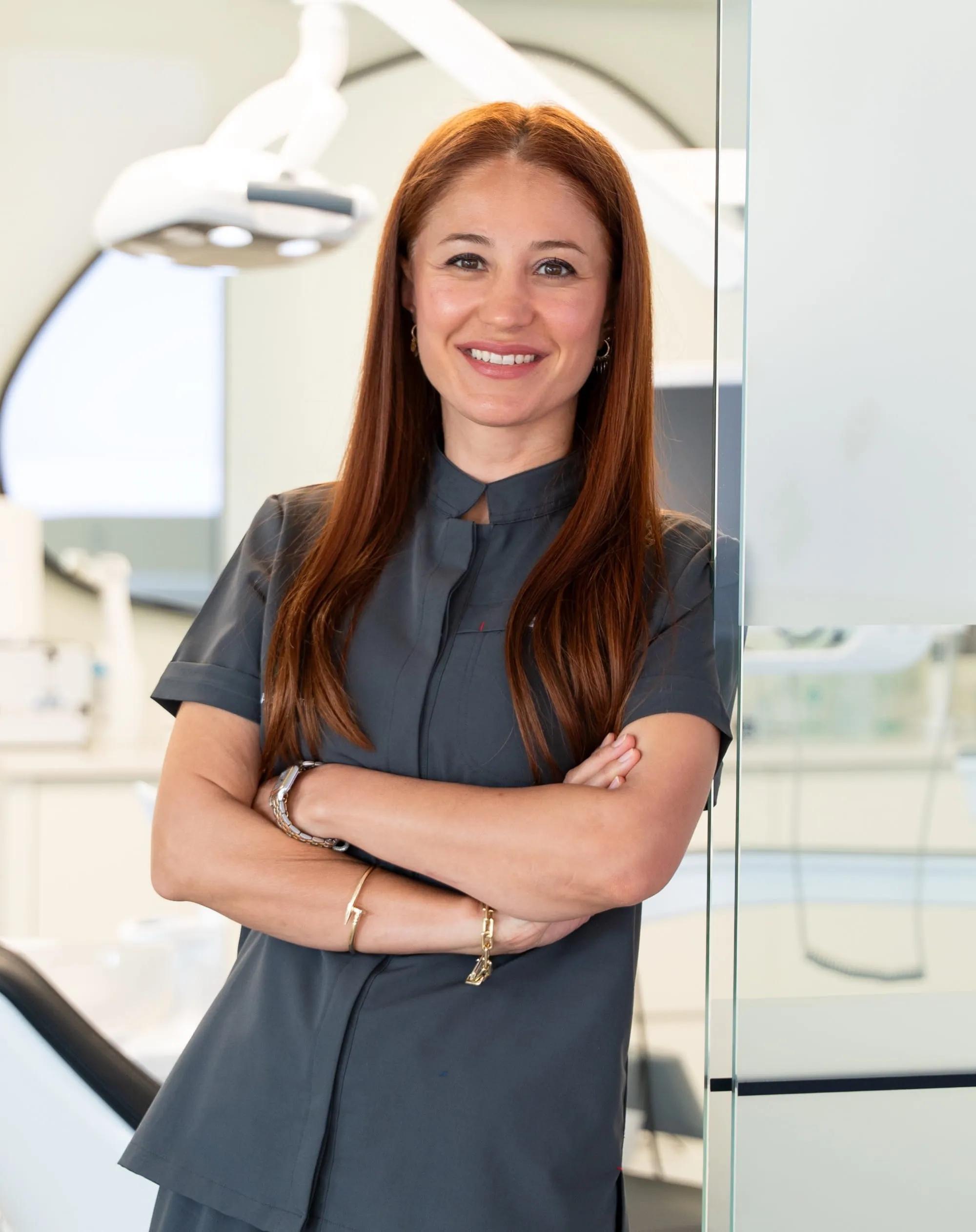
Dt. Dilek AKSU GÜLER
Dentist · Co-founder
Dt. Dilek AKSU GÜLER qualified from the Faculty of Dentistry at Süleyman Demirel University, Turkey, in 2005. She is the founding dentist of our clinic in Lara, Antalya. She works in aesthetic restorations (veneers and crowns), digital smile design and implant-supported prostheses, and speaks Turkish, English and German.
Sources
- Sinus lift procedures (patient information leaflet, document 101925, version 3). Cambridge University Hospitals NHS Foundation Trust (UK), Oral and Maxillofacial Surgery, approved 15 July 2024, accessed 2 October 2026. 2024.↩cuh.nhs.uk
- SDCEP: Anticoagulant or antiplatelet medication and your dental treatment (information for patients). Scottish Dental Clinical Effectiveness Programme (SDCEP), March 2022. 2022.↩sdcep.org.uk
- Cone beam computed tomography in implant dentistry: recommendations for clinical use. BMC Oral Health 2018;18(1):88 (Jacobs R, Salmon B, Codari M, Hassan B, Bornstein MM). 2018.↩doi.org
- Radiation Protection No 172. Cone beam CT for dental and maxillofacial radiology: evidence-based guidelines. European Commission, Directorate-General for Energy (SEDENTEXCT project, Euratom FP7), Luxembourg 2012. 2012.↩op.europa.eu
- NHS: Sinusitis (sinus infection). NHS (nhs.uk). 2024.↩nhs.uk
- Extrasinus complications from odontogenic sinusitis: a systematic review. Otolaryngology-Head and Neck Surgery 2022;166(4):623-632. 2022.↩doi.org
- Long-term effectiveness of maxillary sinus floor augmentation: systematic review and meta-analysis (11 prospective studies, follow-up at least 5 years). Journal of Clinical Periodontology 2019;46 Suppl 21:307-318. 2019.↩doi.org
- Maxillary sinus lift surgery - with or without graft material? A systematic review (16 articles). International Journal of Oral and Maxillofacial Surgery 2016;45(12):1570-1576. 2016.↩doi.org
- Membrane perforation rate in lateral maxillary sinus floor augmentation using conventional rotating instruments and piezoelectric device: a meta-analysis. Int J Implant Dent 2018;4(1):3 (Jordi C, Mukaddam K, Lambrecht JT, Kuhl S). 2018.↩doi.org
- Piezoelectric bone surgery for lateral sinus floor elevation compared with conventional rotary instruments: a systematic review, meta-analysis and trial sequential analysis. Int J Oral Implantol (Berl) 2020;13(2):109-121 (Stacchi C et al.).↩pubmed.ncbi.nlm.nih.gov
- Standards for Conscious Sedation in the Provision of Dental Care (V1.1). Intercollegiate Advisory Committee for Sedation in Dentistry, Dental Faculties of the Royal Colleges of Surgeons and the Royal College of Anaesthetists, 2020. 2020.↩saad.org.uk
- Dental tourism and the risk of barotrauma and barodontalgia (narrative review with guiding principles). British Dental Journal 2023;234(2):115-117. 2023.↩doi.org
- Going abroad for medical treatment. NHS (England), accessed 21 September 2026.↩nhs.uk
- Going abroad for dental treatment (patient information). General Dental Council, accessed 18 September 2026. 2026.↩gdc-uk.org
- Influence of Schneiderian membrane perforation on implant survival rate: systematic review and meta-analysis (10 studies, 7 in the meta-analysis). Journal of Clinical Medicine 2024;13(13):3751. 2024.↩doi.org
- Interventions for replacing missing teeth: horizontal and vertical bone augmentation techniques for dental implant treatment (Cochrane review, 13 RCTs). Cochrane Database of Systematic Reviews 2009;(4):CD003607. 2009.↩doi.org
- Interventions for replacing missing teeth: zygomatic implants for the rehabilitation of the severely atrophic edentulous maxilla (Cochrane review, 2 RCTs). Cochrane Database of Systematic Reviews 2026;7(7):CD004151. 2026.↩doi.org
- Survival and complications of zygomatic implants compared to conventional implants in longitudinal studies with at least 5 years of follow-up: systematic review and meta-analysis (18 studies). Clinical Implant Dentistry and Related Research 2023;25(1):177-189. 2023.↩doi.org
- Peri-implant diseases and conditions: consensus report of workgroup 4 of the 2017 World Workshop on the Classification of Periodontal and Peri-Implant Diseases and Conditions. Journal of Clinical Periodontology 2018;45 Suppl 20:S286-S291. 2018.↩doi.org
- NHS: Dental abscess. NHS (nhs.uk). 2026.↩nhs.uk
- NHS: Toothache. NHS (nhs.uk). 2024.↩nhs.uk
- SDCEP Drug Prescribing for Dentistry: Sinusitis. Scottish Dental Clinical Effectiveness Programme (SDCEP). 2026.↩sdcepdentalprescribing.nhs.scot
- What can I provide a patient on the NHS who has just recently returned after having dental treatment abroad? (Knowledge Base article KA-02010). NHS Business Services Authority, accessed 18 September 2026. 2026.↩faq.nhsbsa.nhs.uk
- Türk Diş Hekimleri Birliği Kanunu, Law No. 3224 (consolidated text). Resmî Gazete 25/6/1985 No 18792; consolidated PDF, mevzuat.gov.tr. 1985.↩mevzuat.gov.tr
- Türk Dişhekimleri Birliği website: Find a Dentist. Türk Dişhekimleri Birliği (TDB).↩tdb.org.tr
- How to make a complaint or get a refund. General Dental Council, accessed 21 September 2026.↩gdc-uk.org
- Ağız ve Diş Sağlığı Hizmeti Sunulan Özel Sağlık Kuruluşları Hakkında Yönetmelik (consolidated text). T.C. Sağlık Bakanlığı; Resmî Gazete 6/10/2022 No 31975, amended RG 5/3/2024-32480 and 15/12/2024-32753. 2022.↩mevzuat.gov.tr
- Uluslararasi Saglik Turizmi ve Turistin Sagligi Hakkinda Yonetmelik. T.C. Saglik Bakanligi, Resmi Gazete 26/4/2025, No 32882. 2025.↩resmigazete.gov.tr
- Yetkili Saglik Tesisleri ve Araci Kuruluslar. T.C. Saglik Bakanligi, Saglik Turizmi Daire Baskanligi, list updated 20 August 2026. 2026.↩shgmturizmdb.saglik.gov.tr
- Hasta Hakları Yönetmeliği (consolidated text). T.C. Sağlık Bakanlığı; Resmî Gazete 1/8/1998 No 23420, amended RG 8/5/2014-28994, 23/12/2016-29927, 16/1/2019-30657. 1998.↩mevzuat.gov.tr
- Treatment abroad checklist. NHS (England), accessed 21 September 2026.↩nhs.uk
- Naar de tandarts in het buitenland? Wees op je hoede!. KNMT / Allesoverhetgebit.nl, 13 April 2026. 2026.↩allesoverhetgebit.nl