
What is a deep cleaning?
Periodontitis is gum disease in which the tissue and bone that hold the teeth in place break down. Plaque and tartar build up on the root surfaces, in the pockets below the gum. A deep cleaning removes them. Dentists call it subgingival cleaning, or scaling and root planing. The European guideline recommends this procedure as the second step1 of treatment for periodontitis.
A routine scale and polish is aimed mainly at deposits above the gum line. A deep cleaning systematically targets the inside of the pockets the disease has created. Someone with healthy gums does not need a deep cleaning. Cleaning can bring the disease under control, but it does not bring back2 the tissue periodontitis has destroyed. For the overall picture of gum disease, see the gum disease page.
This page is written for readers who live in the UK and are considering treatment at our clinic in Antalya, Turkey. On this page, "we" means that clinic. A deep cleaning is one step in a course of gum treatment, not a single visit. The re-assessment and the supportive care that follow usually continue after you go home, with your own dentist or hygienist in the UK. The section "Treatment in Antalya, follow-up in the UK" covers what can be done in Antalya and what continues at home.
- A deep cleaning is for periodontitis; if your gums are healthy, you do not need one.
- You may have sensitivity in the following days; as the gums heal, the root surfaces can become more visible.
- It is not a one-off procedure: re-assessment and regular supportive care follow.
- A deep cleaning is one step in a course of treatment. Agree in writing before you start who carries out the re-assessment and the supportive care once you are back in the UK.
Who needs it, and who does not?
When it may be needed
- People found to have periodontitis at an examination. Which areas are cleaned is decided by looking at the pocket measurements and the bleeding.
- Pockets that bleed again or become deeper during supportive care after treatment for periodontitis
When it is not needed, or something else is considered first
- Healthy gums. A deep cleaning is not needed. Tartar above the gum line can be cleaned at check-ups; your dentist decides how often.
- Gingivitis only. Gingivitis can be reversed with better oral hygiene2. Cleaning above the gum line and improving your oral hygiene is often enough.
- Receding gums without signs of disease. The receded area can be monitored3; cleaning does not reverse recession.
Situations that need care
Routine cleaning, deep cleaning and other options
- Doing nothing. In periodontitis, the tartar below the gum stays where it is; tartar does not dissolve6 at home with a toothbrush, toothpaste or mouthwash.
- Improving oral hygiene. This is the basis of every step, but on its own it does not remove tartar below the gum.
- Routine scale and polish. This mainly cleans plaque and tartar above the gum line. There are studies of adults without severe gum disease who attend regular check-ups. These studies compared a routine scale and polish every 6 or 12 months with no scheduled scale and polish. Over 2 to 3 years, the routine cleaning made little or no difference7 to gingivitis. It reduced tartar slightly; the clinical importance of this is unclear. This result is based on 2 studies of 1,711 adults in the United Kingdom, and the certainty of the evidence is high.
- Deep cleaning (below the gum). In periodontitis, this cleans the inside of the pockets and the root surfaces.
- Air-polishing. In small studies during the care period after treatment, compared with hand and ultrasonic instruments, it showed no statistically significant difference8 in pocket depth. This does not mean the two methods are equivalent; most of the studies carry a high risk of bias. In studies using glycine or erythritol powders, the discomfort patients reported was similar to or lower than9 with hand or ultrasonic instruments. We have found no evidence that it removes established tartar on its own.
- Periodontal surgery. This is considered for pockets that stay deep after a deep cleaning. Whether it is needed is discussed at the re-assessment. See periodontal surgery.
- Mouthwash and antibiotics. Chlorhexidine mouthwash reduces plaque, but it is used only for a short time and it does not remove tartar below the gum. Additional antibiotics or laser are not among the topics we give sources for on this page; if they are suggested, ask your dentist why.
| Routine scale and polish | Deep cleaning | |
|---|---|---|
| What does it clean? | Mainly above the gum line | The pockets below the gum and the root surfaces |
| Who is it for? | People with healthy gums or gingivitis | People with periodontitis |
| Anaesthetic | Usually not needed | Usually local anaesthetic |
| Afterwards | Regular check-ups | Re-assessment and supportive care |
How is a deep cleaning done?
The steps below are for cleaning below the gum as part of treatment for periodontitis. The whole mouth can be cleaned in one session or section by section. How many appointments you need and which route is chosen are planned together after the examination. This depends on how widespread the disease is, your health and your preference. Which steps can be done in Antalya, and which usually continue in the UK, is covered in "Treatment in Antalya, follow-up in the UK".
Examination and measurement
The gum pockets are measured with a thin probe; bleeding points and loose teeth are recorded. X-rays are taken if needed.
Preparation
You are shown how to brush and clean between your teeth in the way that suits you. Plaque and tartar above the gum line are cleaned off. Tell your dentist about the medicines you take and any illnesses you have.
Cleaning below the gum
Usually under local anaesthetic, plaque and tartar are cleaned away from inside the pockets and from the root surfaces with hand instruments or ultrasonic instruments.
Re-assessment
Once the gums have healed, the pockets are measured again. For pockets that stay deep, the cleaning can be repeated or surgery is discussed. If you were treated in Antalya, this usually falls after you have gone home.
Supportive care
Regular check-ups and professional cleaning. The interval is set according to your risk.
Risks and benefits
Risks and side effects
- Sensitivity. In the days after the procedure, your gums may be tender and your teeth sensitive to hot and cold. We cannot say on this page how often this happens or how long it lasts. If the sensitivity continues, see your dentist10 to rule out other causes such as decay. For dentine sensitivity, toothpastes containing stannous fluoride or arginine are recommended among the first options11. This recommendation is based on studies of dentine sensitivity in general; it is not specific to the period after a deep cleaning.
- Gums that look receded. As the inflammation settles and the swelling goes down, the gum margin can sit lower and root surfaces can be exposed. You may feel gaps between your teeth.
- Bleeding. In the first days there may be slight bleeding when you brush.
- Air escaping into the tissues (emphysema). Air escaping into the tissues during dental treatment is an infrequently reported complication12. The case reports include tooth cleaning and air-polishing. Swelling that appears suddenly after treatment and crackles when touched should be checked straight away.
- Chlorhexidine mouthwash. If recommended, it is used for a short time. Used for 4 to 6 weeks, it can stain the teeth13; altered taste and irritation inside the mouth have also been reported.
Benefits
- Periodontitis can be brought under control and gum health can be restored14. Bone that has been lost, however, largely does not grow back.
- In people with periodontitis and diabetes (mostly type 2), gum treatment lowered HbA1c by 0.43 percentage points on average15 at 3 to 4 months. HbA1c is the long-term measure of blood sugar. This result is based on 30 studies and 2,443 participants, and the certainty of the evidence is moderate. It does not replace diabetes treatment.
The figures on this page come from published studies, not from our own records.
At the re-assessment, your dentist measures the pockets again to see how your gums have responded.
How will you feel afterwards, and how should you care for your teeth?
Do not eat until the anaesthetic has worn off; you could bite your lip or cheek without noticing. In the first days your gums may be tender and bleed a little when you brush. Do not stop brushing; carry on with gentle movements.
Daily care
- Brush your teeth at least twice a day with a fluoride toothpaste. After brushing, spit the toothpaste out and do not rinse16 your mouth with water.
- For most people, a toothbrush with a small head and medium bristles17 is suitable.
- Clean between your teeth every day. For people who have been treated for periodontitis, interdental brushes are recommended as the first choice1. Floss is an option where the brush does not fit.
- If your teeth are sensitive, rub a small amount of sensitivity toothpaste onto the sensitive area with your finger and avoid10 acidic food and drinks.
- Use chlorhexidine mouthwash only if your dentist recommends it, and only for a short time.
- If you smoke, ask for support to stop.
- Keep going to the supportive care appointments your dentist sets. If you were treated in Antalya, these are usually with your own dentist or hygienist in the UK.
How long does the effect last?
A deep cleaning is not a one-off solution. In someone whose periodontitis has been treated, the risk of the disease coming back remains increased14, and it needs close monitoring.
The European guideline recommends a supportive care interval of at least 3 and at most 12 months1, depending on the person's risk. Regular professional cleaning is also recommended as part of this care. Keeping your appointments and cleaning between your teeth every day at home are the way to keep the result.
When should you see a dentist?
After a deep cleaning, contact your dentist if you notice:
- Pain or swelling that does not ease within a few days, or keeps getting worse
- Bleeding that does not stop
- A fever
- Sensitivity that has not eased after several weeks
- Teeth becoming more and more loose
Swelling that appears suddenly after treatment and crackles when touched should be checked without waiting12. If you cannot reach your dentist straight away, see a dentist where you are or go to an emergency department. In England, the NHS says to call 111 or get help from 111 online18 if you do not have a dentist. The same applies if you cannot get an emergency appointment.
Emergencies. The following need urgent medical help18. Do not wait for a dental appointment or for the clinic's reply. In the UK, call 999 or go to A&E. In Turkey, the emergency number is 112.
- Swelling that makes it hard to breathe, speak or swallow
- Swelling of the eye or the neck19, a painful eye, or sudden problems with your eyesight
- A lot of swelling inside the mouth
- Finding it hard to open your mouth
Before you fly home
Make sure you have a written record of what was done in which areas, with the pocket measurements and any X-rays, and written care instructions. Know when your re-assessment is due and who will carry it out. Know whom to ask if your gums stay painful or swollen after you have left.
Once you are back in the UK
If a problem comes up that is not urgent, write to the clinic and send photographs. Pain or swelling that keeps getting worse, bleeding that does not stop, or a fever needs a UK dentist, such as your own. See one without waiting for the clinic's reply. If you have no dentist, use NHS 111 as described above. In the emergencies above, call 999 or go to A&E.
Who carries out the treatment?
Your treatment is provided by our clinic in Antalya, Turkey, and carried out there by the clinic's dentists.
Periodontology, the branch of dentistry that deals with the gums, is one of the nine dental specialties set by law in Turkey20. Turkish law ties the specialist title to a specialist certificate20, issued and registered by the Ministry of Health21. In the UK, a dentist may call themselves a specialist only if they are on the GDC's specialist list22. On this page, "your dentist" means the dentist who examines and treats you. "Your own dentist in the UK" means the dentist you see at home.
Ask who will examine you, measure your gums and carry out the cleaning, and who decides on any surgery. Ask what their titles are, where they qualified, and whether any of them holds a Ministry-registered specialist certificate in periodontology. Ask for the answers in writing.
Treatment in Antalya, follow-up in the UK
A deep cleaning is one step in a course of gum treatment. The re-assessment comes only once the gums have healed, and supportive care continues after that, at intervals set by your risk. Some of this can be done during a stay in Antalya. The re-assessment and the supportive care usually continue after you are home, with your own dentist or hygienist in the UK. Agree how this will work before treatment starts.
What can be done in Antalya
Whether you need a deep cleaning cannot be decided from photographs. The General Dental Council says you should be assessed by a qualified dentist before being given a treatment plan and cost estimate23. For a deep cleaning, that assessment is the examination in Antalya.
- Examination and measurement. The pockets are measured and the bleeding points recorded, with X-rays if needed. The plan follows from those measurements.
- Preparation. Advice on cleaning your teeth at home, and cleaning above the gum line.
- Cleaning below the gum line. The whole mouth can be cleaned in one session or section by section over several appointments.
What usually continues in the UK
- The re-assessment. It comes only once the gums have healed, so it usually falls after you have gone home. Plan it with your own dentist in the UK, or plan a return visit to Antalya.
- Further cleaning or surgery. If pockets stay deep at the re-assessment, the cleaning can be repeated or surgery is discussed. So do not expect the cleaning, the re-assessment and any surgery to fit into one trip.
- Supportive care. Regular check-ups and professional cleaning continue at intervals set by your risk (see "How long does the effect last?"). After periodontitis, supportive care is part of the treatment, not an optional extra.
What to agree in writing before you start
Before you book, you receive a written preliminary plan with the appointments and how many days they need. It is based on what you send, such as recent X-rays or gum measurements from your own dentist, and it is not a diagnosis. The examination confirms or changes it, and with it the days and the cost. The number of days in Antalya depends on how many areas need cleaning below the gum. It also depends on other treatment that is to follow, such as implants or crowns; gum disease is usually treated before that work starts.
Ask for the plan to answer these questions:
- Which steps will be done in Antalya, and which are expected to continue in the UK?
- When is the re-assessment due, and who will carry it out: your own dentist in the UK, or the clinic on a return visit?
- If the re-assessment shows that pockets are still deep, who decides on more cleaning or surgery, and where would it be done?
- Which records will you take home for your own dentist?
- Which supportive care interval is recommended for you, and who will provide that care?
You can also ask a dentist in the UK for an independent opinion before you decide. Ask whether you need a deep cleaning, and what having it in the UK would involve. After the examination in Antalya, you can still decide not to go ahead. You can say no, or ask to stop, at any stage.
Flying. We have found no guidance that sets a waiting time before flying after a deep cleaning specifically. A 2023 review of flying after dental treatment suggests waiting about a week after most dental interventions24. The authors note that the research is limited and comes mainly from military aviation. Ask your dentist when you can fly, and treat the review as a starting point for that advice, not as a rule.
Back in the UK: your own dentist, the NHS and your records
Your own dentist or hygienist
The General Dental Council suggests talking to your own dentist23 before you go. They need to know the plan, because the re-assessment and the supportive care that follow are usually theirs. Ask them before you travel whether they will take it on, and what that care will cost. If you do not have a regular dentist, find one before you travel. The NHS lists exchanging medical records and arranging aftercare back home25 among the things to consider before treatment abroad. National guidance in England (NICE) says the interval between check-ups should be set for each person according to their risk26 and discussed with them.
Your records
Ask the clinic for a written record of the treatment to take back to your own dentist. It should show the pocket measurements before the cleaning, and after it if you are re-assessed during your stay. It should also say which areas were cleaned, and which supportive care interval is recommended for you. Ask for copies of any X-rays too. In Turkey, the health tourism regulation entitles international patients to an itemised bill. On request, they also get free copies of the records of the materials used, the tests and the imaging27.
What the NHS does and does not do
In England and Wales, an NHS dental practice may accept you for a course of treatment, not just an urgent appointment. If it does, it provides clinically necessary treatment, with your consent28. This means the treatment that every NHS dental contract must offer. Having been treated abroad does not change that. But the NHS rules on further treatment within 2 months, and on free repair or replacement, do not apply28 to work that another provider did. The NHS also states that it is not liable for negligence or failure of treatment25 when you have treatment abroad. On the NHS England routes that fund planned treatment abroad, you cannot get reimbursement for dental treatment29.
The NHS guidance quoted on this page is for England, and for England and Wales where stated. Scotland and Northern Ireland have their own NHS rules, and we hold no source for them on this page. If you live there, check the local arrangements.
Travel insurance
The NHS says that most travel insurance policies will not cover you for planned treatment abroad, so you may need specialist cover25. Tell your insurer about your plans. Before you book, ask whether anything linked to the treatment is covered, such as a complication or an extra trip.
What the GDC and the NHS tell you to ask
The General Dental Council lists questions to ask before treatment abroad23. Below are most of them, with what this page can answer today and what to ask for in writing.
- Who will carry out my treatment, and what are their qualifications? The treatment is provided by our clinic in Antalya, Turkey. Ask for the name of the dentist who will examine you and carry out the cleaning. Ask where they qualified and what their title is (see who carries out the treatment, above).
- Are you regulated by a professional body and registered with it? In Turkey, a health facility needs an authorisation certificate27 from the Ministry of Health to treat international patients. Authorised facilities appear in a register the Ministry publishes30, so you can check it yourself. The authorisation belongs to the facility, not to the dentist, and it says nothing about the result of your treatment. Ask for the treating dentist's own registration details as well. See health tourism authorisation.
- Will the dental team speak English, or will you provide a translator? Ask who will explain the plan, the consent form and the aftercare instructions to you, in which language, and whether you get them in writing.
- How many times have you carried out this treatment, and what are your rates of success and complications? The figures on this page come from published studies, not from the clinic's own results. Ask the clinic whether it keeps its own figures, and how they were collected.
- Is the work guaranteed, and for how long? A deep cleaning can bring the disease under control, but the disease can come back (see "How long does the effect last?"). This page makes no guarantee. Ask what the clinic's written terms cover, for example further cleaning if the re-assessment shows that pockets are still deep.
- What happens if I am not happy with the result? For a deep cleaning, the result is judged at the re-assessment, when the pockets are measured again. Ask for the clinic's answer in writing.
- What aftercare do you provide, and who can I contact after the treatment? Your written plan should say who carries out the re-assessment and the supportive care. It should also say whom to contact, how, and in which language.
- If there are complications, who pays for further treatment, extra flights and the hotel? Ask for the answer in writing before you commit.
- What happens if the examination shows that I do not need a deep cleaning, or that it is not the right treatment for me? Ask in advance what you pay for the examination, and what happens to anything you have already paid.
- Do you have a complaints system, and can I see a copy? Ask for it before treatment. The GDC says it cannot resolve complaints or help with refunds31; its investigations concern the dentists on its own register. Turkish regulation makes the facility responsible for complications and medical malpractice arising after the health service it provided27.
- Do you have insurance to cover this treatment? In Turkey a facility treating international patients must take out complication insurance for surgical and interventional procedures carried out in an operating theatre27. That does not by itself tell you whether your treatment is covered, so ask which procedures in your plan, if any, fall under it. Ask too, in writing, whether the clinic or the treating dentist holds insurance for complications or errors, what it covers and whom it protects.
The NHS names warning signs to think about before booking any treatment abroad. They are a hard sell, a lack of information, pressure to make a quick decision, no discussion of possible complications, and no mention of aftercare29. Apply them to this clinic too.
What determines the cost?
This page does not give prices. Your treatment plan is prepared for you after the examination. The main factors that shape the plan are:
- In how many areas and on how many teeth cleaning below the gum is needed
- How many appointments it takes and whether anaesthetic is needed
- X-rays, if needed
- Re-assessment, surgery if needed, and supportive care appointments, and whether they take place in Antalya or with your own dentist in the UK
Ask for the plan in writing, showing what is included and which procedures will be assessed separately. Ask too who pays for further treatment and extra travel if there is a complication.
If you are comparing with a plan from a UK practice, compare what each one includes, item by item.
Do you need a deep cleaning?
Write to us, and send any recent X-rays or gum measurements from your own dentist in the UK. Our dentists will write back on what the next step is likely to be; whether you need a deep cleaning, and how many appointments it takes, are only known once the pockets are measured at an examination.
Frequently Asked Questions
How long does a deep cleaning take, and how many visits?
It depends on how widespread the disease is. The whole mouth can be cleaned in one session or section by section over several appointments. How many appointments you need is planned after the examination; the written preliminary plan you receive before you book is confirmed or changed then.
Does a deep cleaning hurt?
Cleaning below the gum is usually done under local anaesthetic. In the following days your gums may be tender and your teeth sensitive to hot and cold. If pain or swelling keeps increasing, or you get a fever, that is not normal; contact your dentist.
What happens if I do not have a deep cleaning?
Tartar below the gum does not dissolve at home and stays where it is. If periodontitis progresses, the tissues that hold the tooth break down, and this damage is irreversible. Teeth can become loose and be lost.
How often should I have my teeth scaled and polished?
In adults without severe gum disease who attend regular check-ups, routine cleaning at set intervals has been compared with no scheduled cleaning. It made little or no difference to gingivitis. It reduced tartar slightly; the clinical importance of this is unclear. For people who have been treated for periodontitis, the supportive care interval is set according to their risk.
Does a deep cleaning whiten teeth?
No. A deep cleaning is not a whitening treatment. Once tartar and surface stains are cleaned off, your teeth may look lighter, but the tooth's own colour does not change. To lighten the colour of your teeth, see the teeth whitening page.
Can air-polishing replace a deep cleaning?
We have found no evidence that air-polishing removes established tartar on its own. Small studies during the care period after treatment compared it with hand and ultrasonic instruments. They found no statistically significant difference in pocket depth, but this does not mean the two methods are equivalent. In studies using glycine or erythritol powders, the discomfort patients reported was similar or lower.
Will my gums be the same as before after a deep cleaning?
The inflammation settles and gum health can be restored. However, bone destroyed by periodontitis largely does not grow back, and as the inflammation settles the gum margin can sit lower. Regular supportive care is needed to keep the result.
Who looks after my gums once I am back in the UK?
Usually your own dentist or dental hygienist in the UK. After a deep cleaning, the re-assessment comes once the gums have healed. Supportive care then continues at intervals set by your risk. Ask your dentist before you travel whether they will take it on. Take the written record of your treatment, with the pocket measurements, to your first appointment.
Can I have a deep cleaning on the same trip as implants or crowns?
Ask before you book. Gum disease is usually treated first: the gums should be under control before implants are placed or crowns or veneers are made. Whether they are is judged at the re-assessment, once the gums have healed. That usually falls after you have gone home, so the implant, crown or veneer work may need a later trip. Ask for the written plan to show the order of the steps and how many days they need.
Can the re-assessment be done in the UK?
Agree this before treatment starts. The re-assessment repeats the pocket measurements once the gums have healed, so it usually falls after you have gone home. It can be planned with your own dentist in the UK or as a return visit to Antalya. Ask who then decides whether more cleaning or surgery is needed, and where it would be done.
Will the NHS look after my gums after a deep cleaning abroad?
In England and Wales, an NHS dental practice may accept you for a course of treatment, not just an urgent appointment. If it does, it provides clinically necessary treatment, with your consent. Having been treated abroad does not change that. But the NHS is not liable for treatment you had abroad, so agree the follow-up with the clinic and your own dentist before you go. Scotland and Northern Ireland have their own NHS rules; if you live there, check the local arrangements.
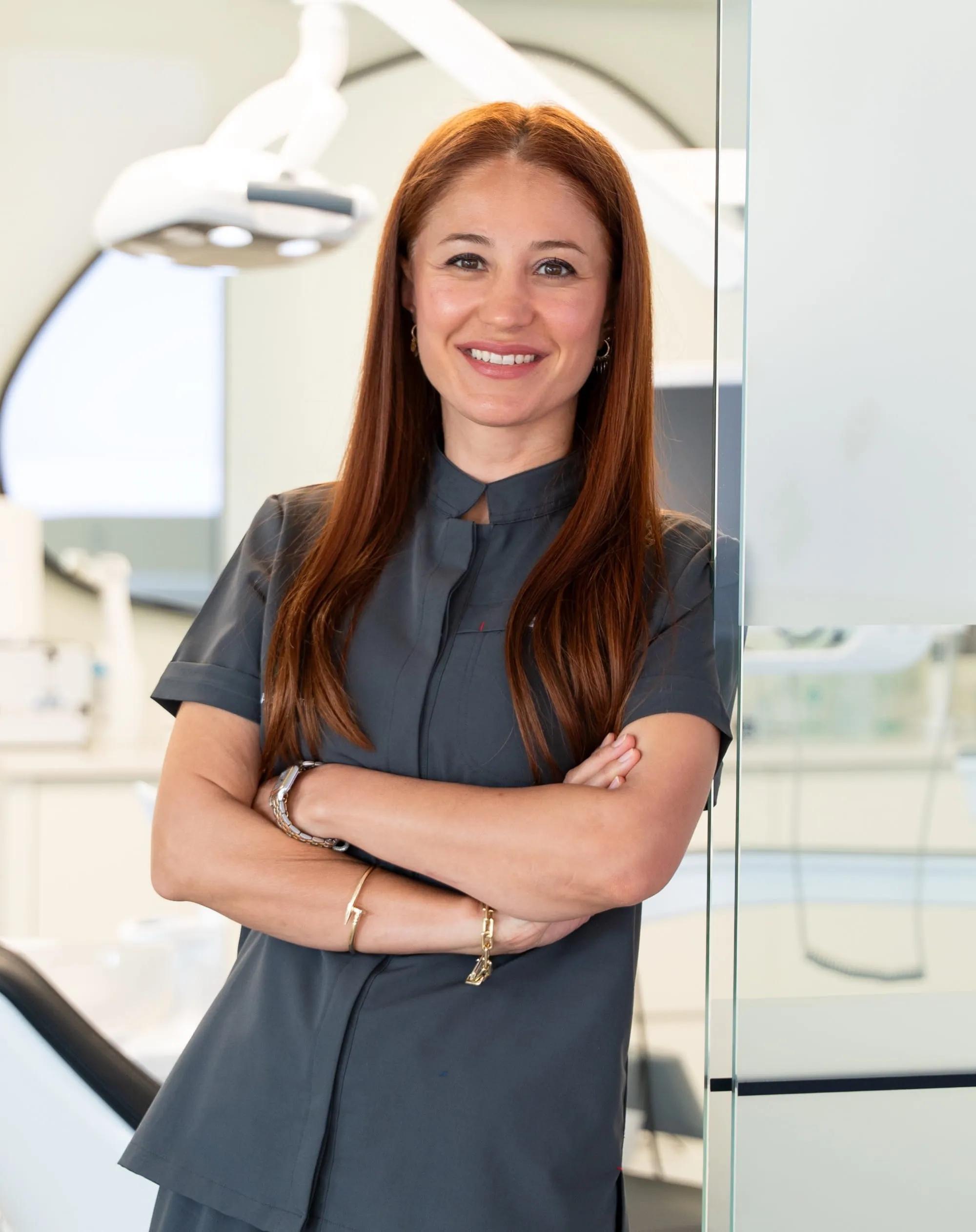
Dt. Dilek AKSU GÜLER
Dentist · Co-founder
Dt. Dilek AKSU GÜLER qualified from the Faculty of Dentistry at Süleyman Demirel University, Turkey, in 2005. She is the founding dentist of our clinic in Lara, Antalya. She works in aesthetic restorations (veneers and crowns), digital smile design and implant-supported prostheses, and speaks Turkish, English and German.
Sources
- Treatment of stage I-III periodontitis - the EFP S3 level clinical practice guideline. Journal of Clinical Periodontology 2020;47 Suppl 22:4-60 (erratum 2021;48:163). 2020.↩doi.org
- Prevention and Treatment of Periodontal Diseases in Primary Care, 2nd edition. Scottish Dental Clinical Effectiveness Programme (SDCEP), February 2024. 2024.↩periodontalcare.sdcep.org.uk
- Mucogingival conditions in the natural dentition: narrative review, case definitions, and diagnostic considerations. Journal of Clinical Periodontology 2018;45 Suppl 20:S190-S198. 2018.↩doi.org
- Delivering Better Oral Health, Chapter 5: Periodontal diseases. Department of Health and Social Care / NHS England et al., updated 10 September 2025. 2025.↩gov.uk
- SDCEP: Anticoagulant or antiplatelet medication and your dental treatment (information for patients). Scottish Dental Clinical Effectiveness Programme (SDCEP), March 2022. 2022.↩sdcep.org.uk
- Dental Floss/Interdental Cleaners (Oral Health Topics). American Dental Association, last updated August 2026. 2026.↩ada.org
- Routine scale and polish for periodontal health in adults. Cochrane Database of Systematic Reviews 2018;12:CD004625. 2018.↩doi.org
- Efficacy of air polishing in comparison with hand instruments and/or power-driven instruments in supportive periodontal therapy and implant maintenance: a systematic review and meta-analysis. BMC Oral Health 2022;22:85. 2022.↩doi.org
- A systematic review on the patient perception of periodontal treatment using air polishing devices. International Journal of Dental Hygiene 2016;14(1):4-14. 2016.↩doi.org
- SDCEP Management of Acute Dental Problems: Dentine hypersensitivity. Scottish Dental Clinical Effectiveness Programme (SDCEP). 2026.↩acutedentalproblems.sdcep.org.uk
- Dentifrice formulations for the treatment of dentin hypersensitivity: a systematic review and network meta-analysis. Periodontology 2000, 2026 (Gormley AJ et al.). 2026.↩doi.org
- Dental Procedure-Related Emphysema: A Scoping Review of Clinical Presentation, Anatomical Distribution, Management, and Outcomes. Dental Journal (Basel) 2026;14(9):602. 2026.↩doi.org
- Chlorhexidine mouthrinse as an adjunctive treatment for gingival health. Cochrane Database of Systematic Reviews 2017;3:CD008676. 2017.↩doi.org
- Periodontal health and gingival diseases and conditions on an intact and a reduced periodontium: consensus report of workgroup 1 of the 2017 World Workshop. Journal of Clinical Periodontology 2018;45 Suppl 20:S68-S77. 2018.↩doi.org
- Treatment of periodontitis for glycaemic control in people with diabetes mellitus. Cochrane Database of Systematic Reviews 2022;4:CD004714. 2022.↩doi.org
- Gum disease. NHS, page last reviewed 20 April 2026. 2026.↩nhs.uk
- Delivering Better Oral Health, Chapter 8: Oral hygiene. Department of Health and Social Care / NHS England et al., updated 10 September 2025. 2025.↩gov.uk
- NHS: Dental abscess. NHS (nhs.uk). 2026.↩nhs.uk
- NHS: Toothache. NHS (nhs.uk). 2024.↩nhs.uk
- 1219 sayılı Tababet ve Şuabatı San'atlarının Tarzı İcrasına Dair Kanun (consolidated text). T.B.M.M.; RG 14/4/1928 No 863; consolidated on mevzuat.gov.tr. 1928.↩mevzuat.gov.tr
- Tıpta ve Diş Hekimliğinde Uzmanlık Eğitimi Yönetmeliği. T.C. Sağlık Bakanlığı; RG 3/9/2022 No 31942, amended RG 7/10/2023-32332 and 16/5/2024-32548. 2022.↩mevzuat.gov.tr
- Specialist lists. General Dental Council (UK).↩gdc-uk.org
- Going abroad for dental treatment (patient information). General Dental Council, accessed 18 September 2026. 2026.↩gdc-uk.org
- Dental tourism and the risk of barotrauma and barodontalgia (narrative review with guiding principles). British Dental Journal 2023;234(2):115-117. 2023.↩doi.org
- Going abroad for medical treatment. NHS (England), accessed 21 September 2026.↩nhs.uk
- Dental checks: intervals between oral health reviews (clinical guideline CG19). National Institute for Health and Care Excellence, published 27 October 2004. 2004.↩nice.org.uk
- Uluslararasi Saglik Turizmi ve Turistin Sagligi Hakkinda Yonetmelik. T.C. Saglik Bakanligi, Resmi Gazete 26/4/2025, No 32882. 2025.↩resmigazete.gov.tr
- What can I provide a patient on the NHS who has just recently returned after having dental treatment abroad? (Knowledge Base article KA-02010). NHS Business Services Authority, accessed 18 September 2026. 2026.↩faq.nhsbsa.nhs.uk
- Treatment abroad checklist. NHS (England), accessed 21 September 2026.↩nhs.uk
- Yetkili Saglik Tesisleri ve Araci Kuruluslar. T.C. Saglik Bakanligi, Saglik Turizmi Daire Baskanligi, list updated 20 August 2026. 2026.↩shgmturizmdb.saglik.gov.tr
- How to make a complaint or get a refund. General Dental Council, accessed 21 September 2026.↩gdc-uk.org