
What digital smile design is
Digital smile design means planning the look of your teeth on a computer before any treatment. The dentist works from photographs of your face and smile, sometimes video, and often from a 3D scan of your teeth. The planned shape, length and position of the front teeth are drawn on these records and shown to you on a screen as a simulation.
A 2025 systematic review describes a typical workflow. It combines facial photographs, scans of the teeth, a design on the computer and printed or milled mock-ups1. A mock-up is a temporary copy of the design in tooth-coloured material. It is placed over your teeth, so that you can see and feel the planned shape in your own mouth.
Digital smile design is a way of planning and explaining treatment. It is not a treatment in itself. The preview is a simulation, not a promise: the result depends on your teeth, gums and bite, and on the treatment you choose.
On this page, "we" and "our clinic" mean our clinic in Antalya, Turkey. Our technology and laboratory page gives an overview of the related technology.
- Digital smile design plans the look of your front teeth on photographs, video and scans, and shows the plan on a screen as a simulation.
- A simulation is a picture of a plan, not a promise. In one small study, real smiles after treatment differed from the preview in several features.
- In suitable cases, a mock-up lets you try the planned shape in your mouth before any tooth is prepared. It is a copy of the design, not the final restoration.
- A design shows a goal, not a treatment. The goal may be reached with less treatment than a simulation suggests, or with none.
- Research on smile design is limited: reviews found few studies, mostly small. Ask who makes and checks your design, and for copies of your records.
Consultation and records
Smile design starts with what you want to change, and why. The dentist asks what bothers you about your smile. Your teeth, gums and bite are examined, and the dentist looks for decay, gum disease, worn teeth and signs of clenching or grinding. You are asked about your medical history, including medicines and smoking. Problems in the mouth are treated, or planned for, before any cosmetic work; a design does not replace that care.
Records commonly used include:
- Photographs of your face and teeth, taken from set angles, smiling and at rest. The design is planned against your face, not only your teeth.
- Video of you talking and smiling, in some clinics. A smile moves, and a still photograph does not show how much tooth and gum you show when you speak or laugh.
- A scan of your teeth (an intraoral scan) or a conventional impression. A 2017 review notes that intraoral scans can also be used for digital smile design2. Our digital scanning page explains how a scan is taken and checked.
- X-rays, where the dentist needs them, for example to check the roots and the bone before crowns or other treatment.
- Your bite, so that new tooth shapes fit the way your upper and lower teeth meet and move.
Which records are taken, and how, varies between clinics. Ask which records will be taken for you, and why.
Digital planning workflow
The steps vary between clinics and with the software used. The outline below is typical. Whether your design will be made this way, with which software, and by whom, is something to ask.
The design starts from your face. The 2025 review describes facial photographs aligned with reference planes1. These are lines such as the one between the pupils, the centre line of the face and the curve of the lower lip. The length, width and shape of the front teeth, and how much gum shows, are then planned against them. Some designs use proportions between tooth widths as a starting point. A 2022 systematic review found that tooth proportions varied substantially in natural teeth3. No mathematical formula, such as the "golden proportion", gave results consistent enough to serve as a standard guide3 for a pleasing smile. The design is adapted to your face, and you have a say in it.
Your goals
What you want to change is made specific: colour, shape, length, gaps, or how much gum shows.
Examination and records
Your teeth, gums and bite are examined, and photographs, video and a scan or impression are taken. Decay and gum disease are treated first.
Analysing your face and smile
Reference lines and your current teeth are marked on the photographs, and what could change is assessed against them.
The digital design
The new tooth shapes are drawn on the photographs, or modelled in 3D on the scan. You see the result on a screen as a simulation.
A model of the design
In many cases, the design is turned into a model of the new tooth shapes. It is either built in wax on a model of your teeth (a wax-up) or designed on a computer and printed.
Trial in the mouth (mock-up)
In suitable cases, a mould taken from the model is filled with tooth-coloured material. It is placed over your teeth, usually without cutting them. You can look, speak and smile with it, and ask for changes. It is then removed.
Agreeing the plan
The design is adjusted until you and the dentist agree. The treatment for each tooth is then written down, before any tooth is prepared. Agreeing a design is not agreeing to treatment: ask about the risks, alternatives and upkeep of each treatment before you consent.
What the preview can and cannot show
What it can show
- the planned length, width and shape of your front teeth, and how they sit against your lips and face;
- roughly how much tooth and gum would show when you smile;
- differences between options, for example changing two teeth or eight;
- with a mock-up, how the planned shape looks and feels in your own mouth, and how you speak with it.
Authors of a 2025 study write that a mock-up lets the dentist assess appearance, function and speech before the final restorations are made4. A 2024 scoping review looked at clinical trials of digital planning tools in prosthodontics (crowns, bridges, veneers and dentures). Simulation using digital smile design or a digital wax-up5 was the most frequent diagnostic use in those trials. The authors saw its future potential especially in communication with the patient and among dental professionals5.
What it cannot show
- The exact result. A 2024 study compared smile simulations made with a phone app before clear-aligner treatment with the real smiles of 24 adults afterwards. On average, five measures, such as smile width, were similar6. Others could not be predicted reliably6, such as the curve of the upper front teeth and how many teeth showed. Several features of the real smiles came closer to the authors' ideal than predicted. That was this study's finding; it does not mean a result will look better than its preview. It was small, tested one app, and covered tooth straightening, not veneers or crowns. One author declared lecturing at conferences sponsored by the app's maker.
- The final colour and translucency. A screen shows colour differently from real teeth in daylight. A mock-up is made of a temporary material, not the final ceramic or composite. The final colour, translucency and gum appearance may differ.
- What lies under the surface. Photographs and a scan of the teeth cannot rule out decay, and do not show the nerve, the roots or the bone. Whether a tooth can take the planned treatment is decided at an examination, with X-rays where needed.
- Every plan. A mock-up is made by adding material over the teeth. On crowded or protruding teeth, it can make the teeth look bulkier than they will be, so it cannot represent every plan. Ask whether a mock-up can show yours.
- An exact trial. A mock-up is a close copy of the design, not an exact one. In a small 2025 study, how closely it matched the planned design depended on the material and technique used to make it4.
- How long the result will last, or how your teeth will cope with clenching or grinding.
Simulations are for planning
A simulation shown to you is a planning tool. It shows a proposal for your mouth, not what a clinic has achieved for other people. This page shows no simulated images, before-and-after photographs or patient reviews. Treat any picture of a "new smile" used to sell treatment with caution: it may be a simulation, not a result.
How the plan connects to treatment options
A design shows a goal. The treatment plan then decides which treatment, if any, can reach it for each tooth. In a good plan, the least invasive option that meets your goal comes first, and some goals need less treatment than a simulation suggests. Options a design may lead to include:
- Whitening, for a colour concern, where the cause of the discolouration allows.
- Orthodontic treatment, which moves crowded, gapped or rotated teeth instead of covering them. Tooth movements are planned on a computer too; our digital treatment planning page explains how, and where plans and results differ.
- Composite bonding, which adds tooth-coloured resin to reshape a tooth, usually without cutting it.
- Veneers, thin shells on the front of the teeth. Enamel is usually removed, and removed enamel does not grow back7.
- Crowns, which cover the whole tooth and remove more tissue. A crown on a sound tooth only for appearance is not the first option.
- Gum reshaping, where the gum line is the concern, once its cause has been assessed.
Where veneers are planned, a mock-up can also guide the dentist while the teeth are prepared. Authors of a 2025 study note that minimally invasive approaches increasingly use the trial restoration as a guide for preparing the teeth4.
A simulation that shows every front tooth changed does not mean every tooth needs a veneer or a crown. Ask for a reason for each tooth in the written plan. Our smile makeover page explains how such a plan is put together and in which order treatments are considered. Our cosmetic dentistry page gives an overview of the treatments.
Limitations and clinical assessment
What the research shows
We have found little good research on digital smile design.
- A 2025 systematic review found seven studies1 of patients' views of smile design in cosmetic treatment. They were one randomised trial, four observational studies, one small qualitative study and one case report. Six of them reported positive findings for patient satisfaction or communication1. But the authors note that many studies were observational, had small samples, or had short follow-up1. Long-term data from randomised trials remain limited1.
- In one small study reported in that review, more patients rated the mock-up in the mouth "very effective" than the on-screen preview1. It had no comparison group.
- A 2024 scoping review found a relatively low number of clinical trials5 of digital planning tools for crowns, bridges, veneers and dentures.
- One small 2022 study milled composite veneers from the 3D design for 30 patients at one private practice in Italy. Measured outside the mouth, their length and width did not differ significantly from the plans8. But the plan drawn on photographs and the 3D plan differed from each other8, mainly in tooth widths. The veneers were only tried in, not bonded, and were not followed over time. The authors name the small sample, the one material and the software tested8 as limitations.
So the studies we cite cannot tell us whether a digital design leads to a better or longer-lasting result than conventional planning. The 2025 review adds that clinician experience, software, laboratory workflows and patient selection1 vary and likely influence outcomes.
The examination comes first
A design is made for appearance. Whether it suits your mouth depends on the health of your teeth and gums and on your bite. Clenching or grinding, and how much sound tooth is left, matter too. These are assessed at an examination, with X-rays where needed. A design made from photographs you send is a first idea, not a plan. The examination can change it or rule it out.
Who designs and who decides
The software does not decide anything. A dentist analyses the records and agrees the design with you. A dental technician may build the wax-up or the digital model. If software suggests a design automatically, a dentist still has to check it against your teeth, gums and bite. Ask who makes your design, who checks it, and who will carry out the treatment.
Smile design is not a dental specialty. The law in Turkey sets nine dental specialties9, and smile design is not among them. A certificate or similar training document cannot be used as a specialist title10 in Turkey, under any name. In the UK, dentists do not have to join a specialist list11 to practise a specialty. They may use the title "specialist" only if they are on the General Dental Council (GDC) list. The GDC has no specialist list for cosmetic dentistry11. Ask what each dentist's titles are and where they qualified.
If you live in the UK: questions and records
Before treatment, ask in writing:
- whether a digital design and a mock-up are part of your plan, and what they include;
- which records will be taken, who makes the design, who checks it, and where;
- what may differ between the agreed design and the result;
- what the written terms say if the result differs from the agreed design, or a restoration fails after you are home;
- who pays for further treatment and for any extra trip.
Bring home for your UK dentist copies of your photographs, scans and X-rays, and the design you agreed. Add a written record of each tooth's treatment: the material, the product and the laboratory.
Aftercare. Problems after you return are usually first seen by your own dentist in the UK. If you do not have one, it helps to find one before you travel. The GDC suggests speaking to your own dentist12 before you consider treatment abroad. The NHS website for England says the NHS is not liable for negligence or failure of treatment13 abroad. It also says that most travel insurance policies will not cover you for planned treatment abroad13. Scotland, Wales and Northern Ireland run their own health services, with their own rules, which this page does not cover; if you live there, ask your dentist.
Your choice. Dentists in the UK also plan smiles digitally and use mock-ups, and a UK opinion gives you something to compare. You can still say no, or ask to stop, at any stage; once a tooth has been prepared, that step cannot be undone.
Our smile makeover page lists the questions the General Dental Council and the NHS suggest you ask before treatment abroad.
Next steps
- Decide what you want to change, and why. Pictures of smiles you like can help the conversation, but your design starts from your own face and teeth.
- Have your teeth and gums examined. A design you can rely on needs an examination, with X-rays where needed.
- Ask to see the design, and whether a mock-up is possible, before any tooth is prepared. Ask for changes until it looks right to you.
- Ask for the plan in writing, with the treatment and the reason for each tooth. Ask what is likely to differ from the preview.
- Take your time. A second opinion, for example from your own dentist in the UK, is normal. You can choose less treatment, say no, or ask to stop, at any stage. Once a tooth has been prepared, that step cannot be undone, and the tooth needs a restoration.
Your photographs and files
Photographs and video of your face, and scans of your teeth, are personal records. Ask before treatment:
- where they are stored, who can see them, and how long they are kept;
- whether any are sent to a laboratory or a design service, and where;
- whether they would be used for anything other than your treatment, such as teaching or advertising.
In Turkey, Ministry of Health guidance says patient images may be used in promotion only with explicit consent on a set form14. You can refuse. Patients may also examine their file and records and obtain a copy15. The health tourism regulation entitles international patients, on request, to free copies of the records of the materials used, the tests and the imaging16. Ask whether your photographs and design files are included. Data protection law in the UK and in Turkey is not explained here; ask the clinic for its privacy notice.
Frequently Asked Questions
Will my new smile look exactly like the simulation?
No. A simulation is a picture of a plan. The result depends on your teeth, gums and bite, the treatment chosen and how your mouth heals. In one small study of tooth straightening, real results differed from the preview in several features.
What is a mock-up, and does it harm my teeth?
A mock-up is a temporary copy of the design in tooth-coloured material, placed over your teeth. It is usually made without cutting them and is removed afterwards. It lets you see and test the planned shape, but it cannot represent every plan.
Does a smile design mean I need veneers?
No. A design shows a goal, not a treatment. The goal may be reached with whitening, bonding or orthodontic treatment, or not need treatment at all. Ask for a reason for each tooth that is planned for a veneer or a crown.
Can a design be made from photos I send?
Photographs can give a first idea. A design you can rely on needs an examination of your teeth, gums and bite, with X-rays where needed, and often a scan. The examination can change the plan or rule it out.
Is smile design a dental specialty?
No. It is not one of the dental specialties set by law in Turkey, and the UK's General Dental Council has no specialist list for cosmetic dentistry. Ask who will design and carry out your treatment, and where they qualified.
Can I keep my photographs and design?
Ask before treatment. Request copies of your photographs, scans and the agreed design, in formats your UK dentist can open. Ask how long the clinic keeps them, who else receives them, and whether they would be used for anything else.
Can I change my mind after seeing the design?
Yes. The design and the mock-up are there to help you decide. You can ask for changes, choose a different option, say no, or ask to stop, at any stage. Once a tooth has been prepared, that step cannot be undone.
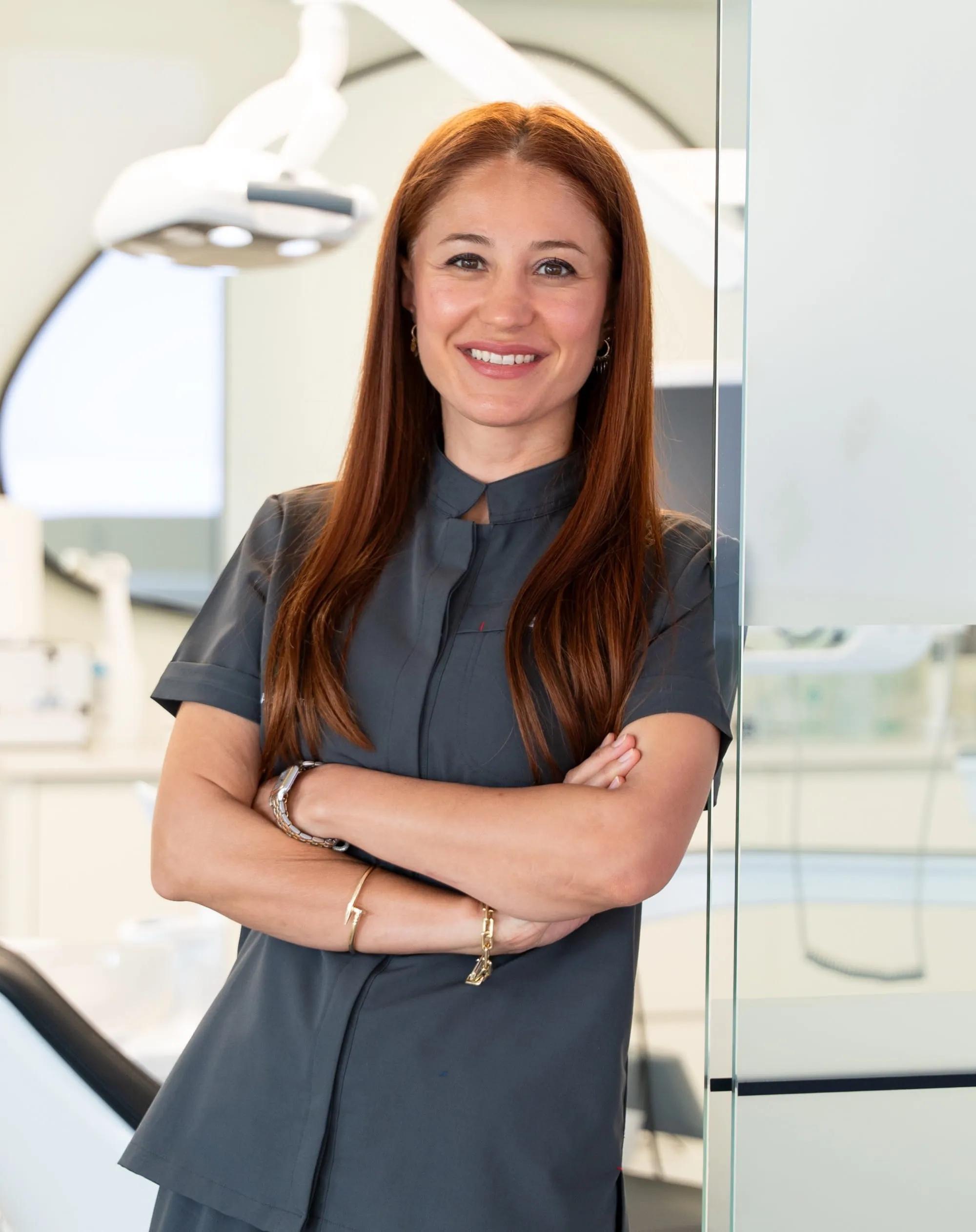
Dt. Dilek AKSU GÜLER
Dentist · Co-founder
Dt. Dilek AKSU GÜLER qualified from the Faculty of Dentistry at Süleyman Demirel University, Turkey, in 2005. She is the founding dentist of our clinic in Lara, Antalya. She works in aesthetic restorations (veneers and crowns), digital smile design and implant-supported prostheses, and speaks Turkish, English and German.
Sources
- Digital Smile Design and patient-centered outcomes in esthetic restorative dentistry: a systematic review. Cureus 2025;17(11):e98084 (Alwabel LK, Alabduljabar WM, Alawfi LK, et al.; Saudi universities). 2025.↩doi.org
- Intraoral scanners in dentistry: a review of the current literature. BMC Oral Health 2017;17(1):149 (Mangano F, Gandolfi A, Luongo G, Logozzo S). 2017.↩doi.org
- Mathematical tooth proportions: a systematic review. J Prosthodont 2022;31(4):289-298 (Akl MA, Mansour DE, Mays K, Wee AG; University of Minnesota). 2022.↩doi.org
- Comparison of dimensional accuracy of diagnostic trial restoration transfer with four different methods: a randomized clinical trial. J Clin Med 2025;14(9):3240 (Caponi LQ, Fenoy-Illacer P, Figueras-Álvarez O, de Lima Flor E, Vidal-Ponsoda C, Roig M; International University of Catalunya). 2025.↩doi.org
- Clinical use of digital applications for diagnostic and treatment planning in prosthodontics: a scoping review. Clin Oral Implants Res 2024;35(8):782-792 (Joda T, Balmer M, Jung RE, Ioannidis A; University of Zurich / University of Basel). 2024.↩doi.org
- Clinical audit of an artificial intelligence (AI) empowered smile simulation system: a prospective clinical trial. Sci Rep 2024;14(1):19385 (Adel SM, Bichu YM, Pandian SM, Sabouni W, Shah C, Vaiid N). 2024.↩doi.org
- Veneers. American Dental Association, MouthHealthy.↩mouthhealthy.org
- Digital planning of composite customized veneers using Digital Smile Design: evaluation of its accuracy and manufacturing. Clin Exp Dent Res 2022;8(2):537-543 (Ortensi L, Sigari G, La Rosa GRM, Ferri A, Grande F, Pedullà E; University of Catania). 2022.↩doi.org
- 1219 sayılı Tababet ve Şuabatı San'atlarının Tarzı İcrasına Dair Kanun (consolidated text). T.B.M.M.; RG 14/4/1928 No 863; consolidated on mevzuat.gov.tr. 1928.↩mevzuat.gov.tr
- Sağlık Hizmetlerinde Tanıtım ve Bilgilendirme Faaliyetleri Hakkında Yönetmelik. T.C. Sağlık Bakanlığı; RG 12/11/2025 No 33075. 2025.↩resmigazete.gov.tr
- Specialist lists. General Dental Council (UK).↩gdc-uk.org
- Going abroad for dental treatment (patient information). General Dental Council, accessed 18 September 2026. 2026.↩gdc-uk.org
- Going abroad for medical treatment. NHS (England), accessed 21 September 2026.↩nhs.uk
- Sağlık Hizmetlerinde Tanıtım ve Bilgilendirme Faaliyetleri Hakkında Sıkça Sorulan Sorular. T.C. Sağlık Bakanlığı, Sağlık Hizmetleri Genel Müdürlüğü, Denetim ve Değerlendirme Dairesi; announcement 17 Nov 2025. 2025.↩dosyamerkez.saglik.gov.tr
- Hasta Hakları Yönetmeliği (consolidated text). T.C. Sağlık Bakanlığı; Resmî Gazete 1/8/1998 No 23420, amended RG 8/5/2014-28994, 23/12/2016-29927, 16/1/2019-30657. 1998.↩mevzuat.gov.tr
- Uluslararasi Saglik Turizmi ve Turistin Sagligi Hakkinda Yonetmelik. T.C. Saglik Bakanligi, Resmi Gazete 26/4/2025, No 32882. 2025.↩resmigazete.gov.tr
Specialists Who Perform This Treatment
Dt. Dilek AKSU GÜLER
Dentist, co-founder of Antlara Dental
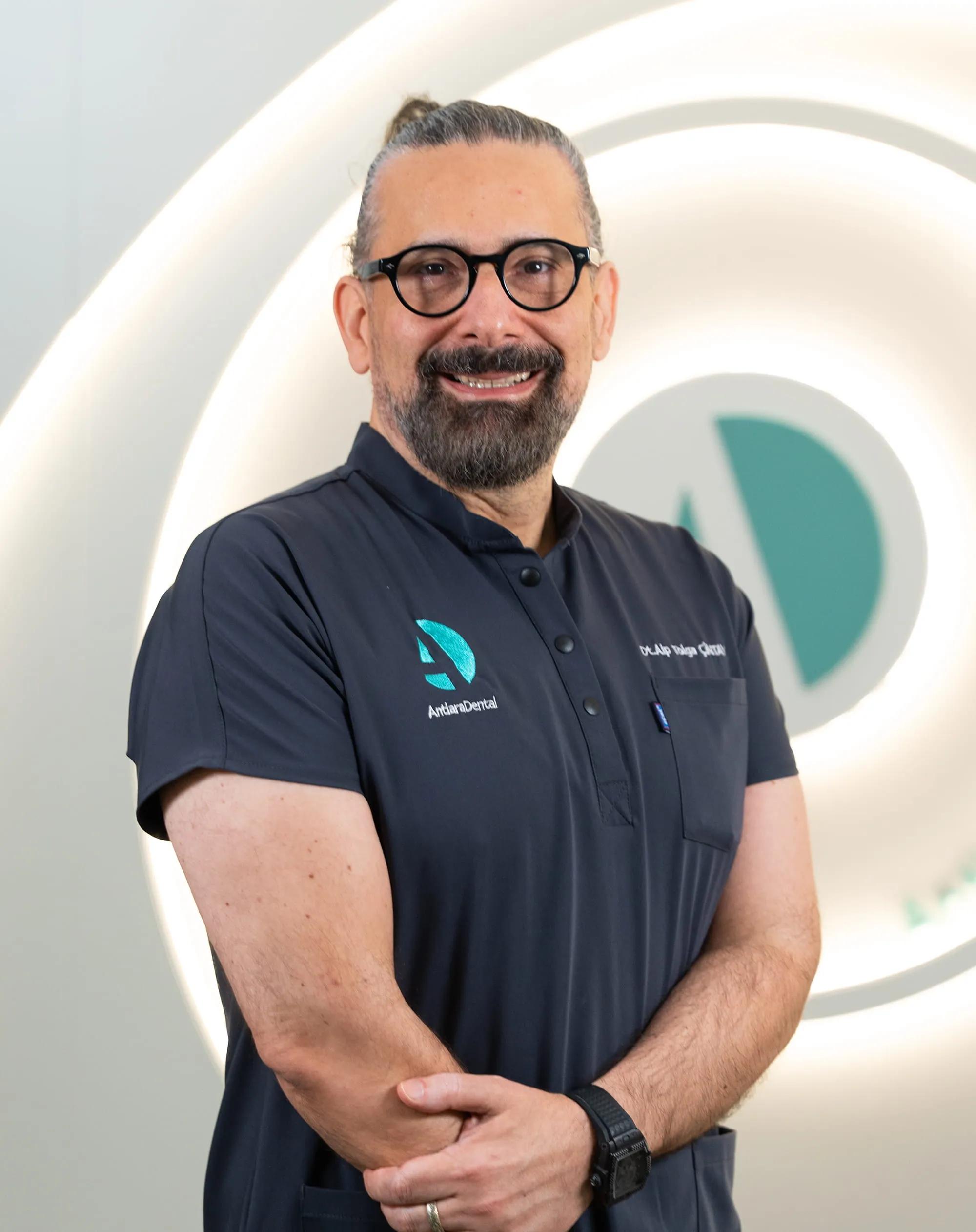
Dt. Alp Tolga ÇİNTAV
Dentist with postgraduate training in dentomaxillofacial radiology; digital smile design
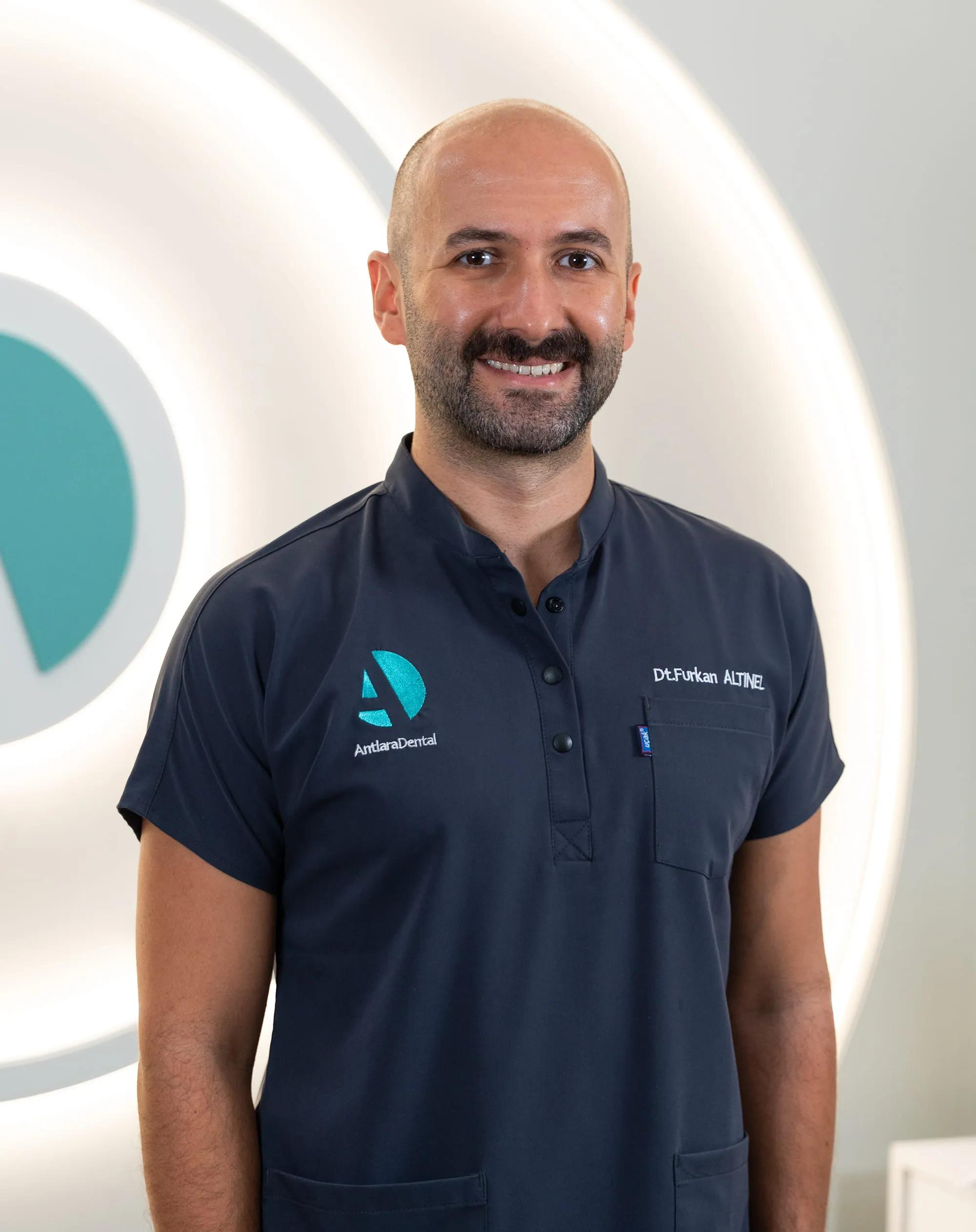
Dt. Furkan ALTINEL
Dentist; aesthetic dentistry, implants and prosthetic treatments
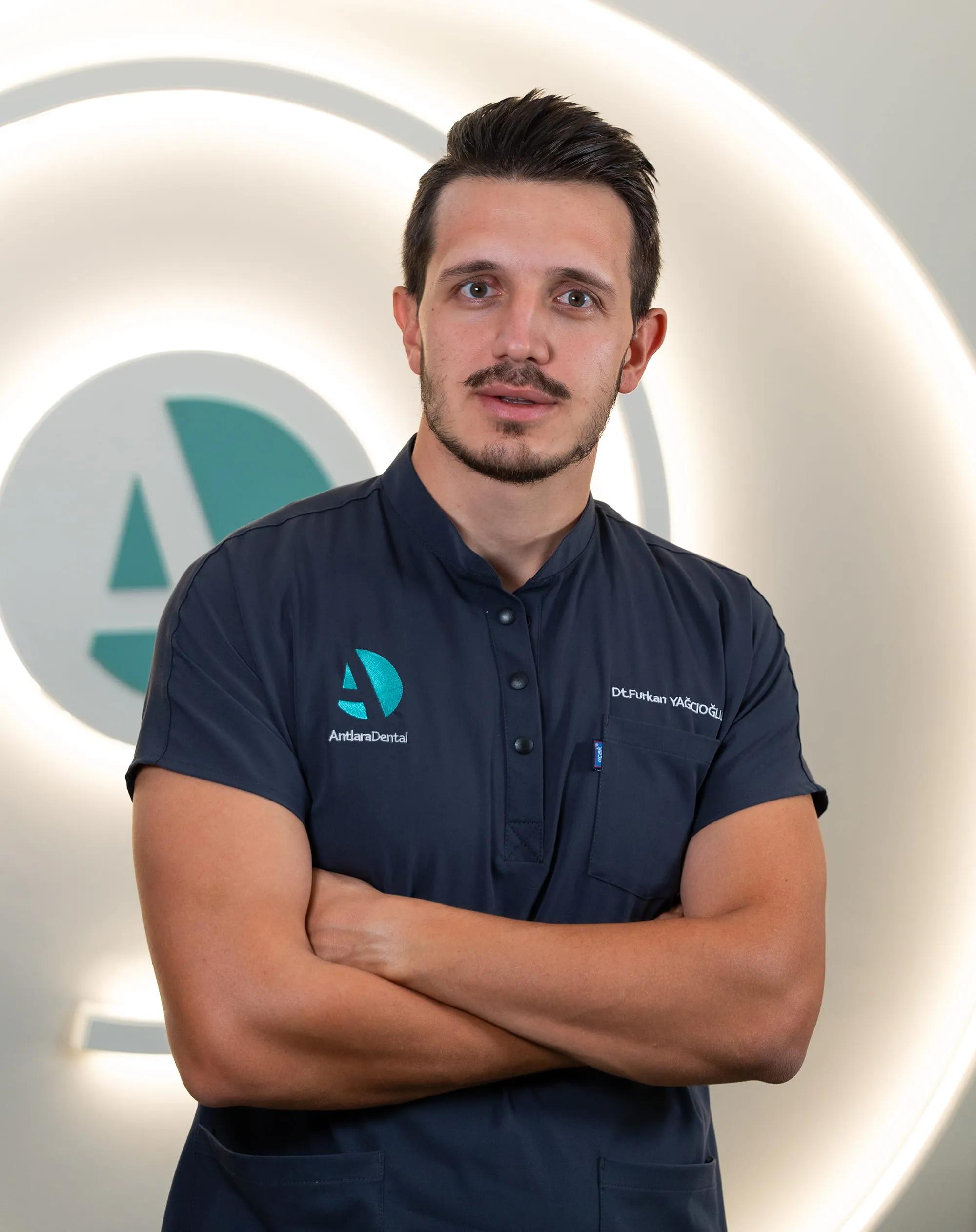
Dt. Furkan YAĞCIOĞLU
Dentist; smile design and All-on-4 / All-on-6 implant-supported prostheses
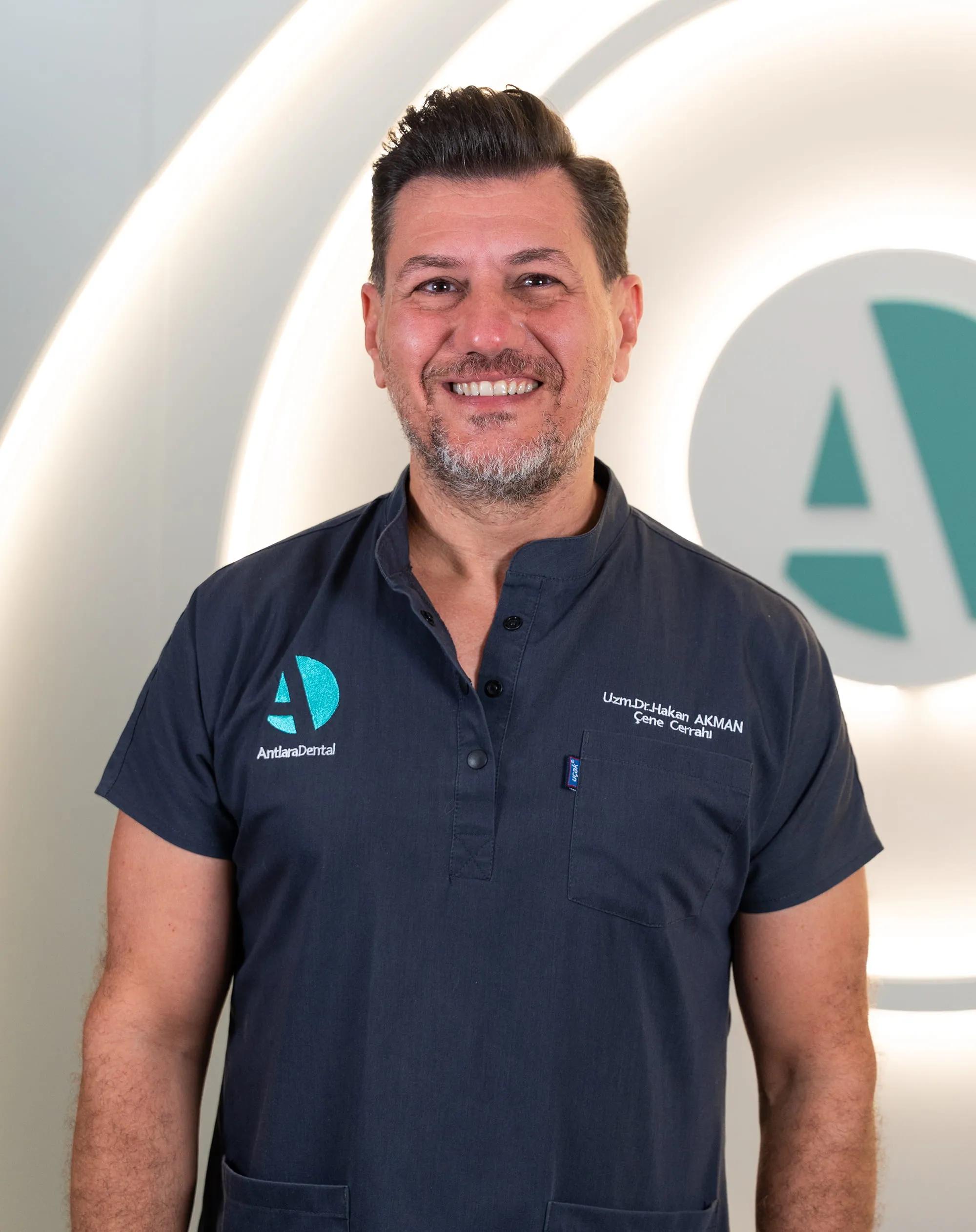
Dt. Hakan AKMAN
Dentist; implantology, digital smile design and cosmetic dentistry
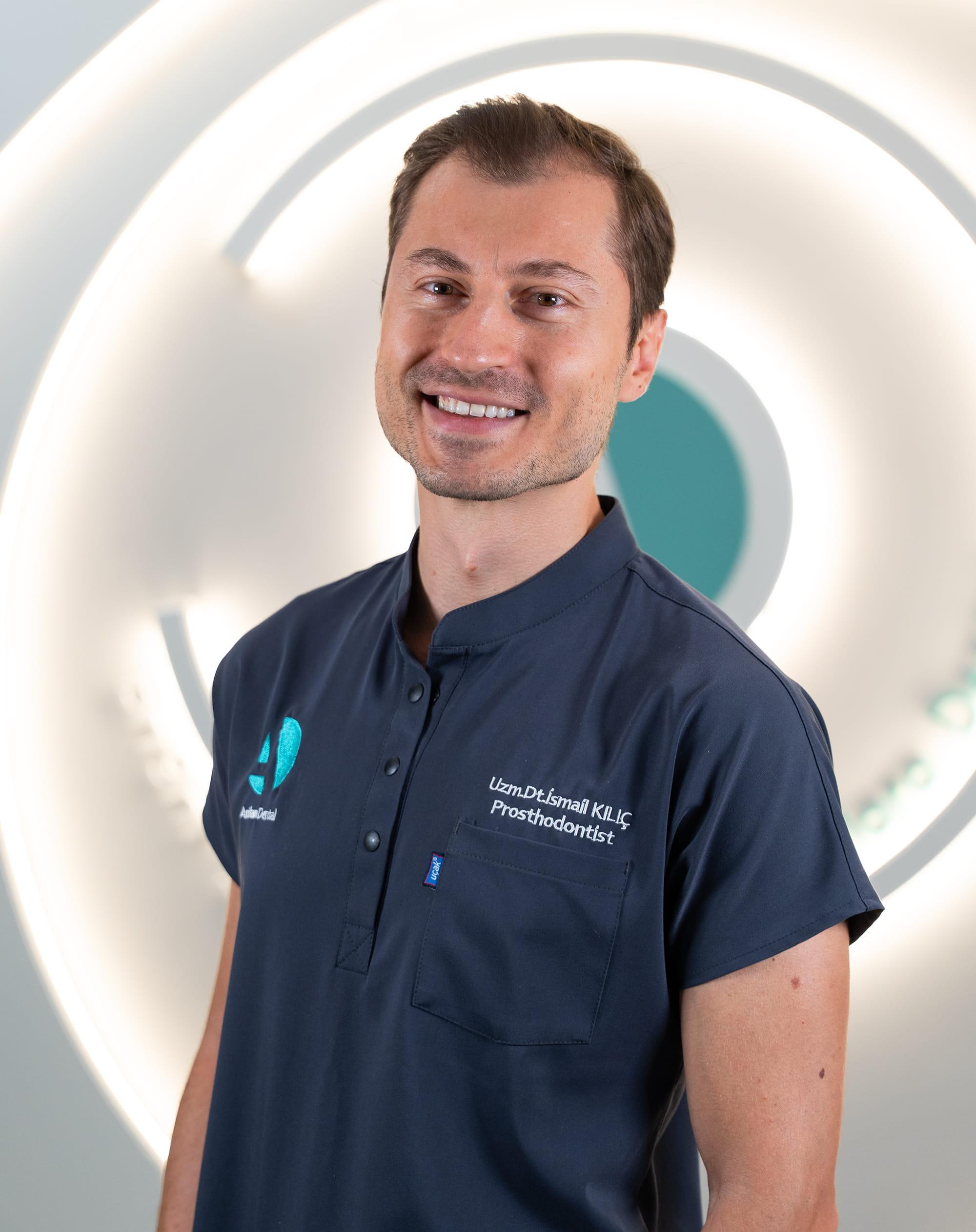
Dt. İsmail KILIÇ
Prosthodontist; aesthetic dentistry, digital smile design and implants