What is a veneer or a crown, and which suits me?
In Turkish, "diş kaplama" is used for two different treatments. A laminate veneer (lamina or yaprak porselen) is a thin layer of ceramic bonded to the front surface of the tooth. A crown is a cap that covers the whole tooth, which is reduced in size to receive it. Both are made in a laboratory, but they differ greatly in how much tissue they remove from the tooth and in the situations they suit.
For a colour complaint, whitening is often the option that changes the tooth least; for small flaws in shape, bonding; for crooked teeth, orthodontics. A crown is not a treatment for a healthy tooth just to change how it looks; it is considered for teeth that have lost a lot of structure and where a veneer would not be enough. A fracture or root canal treatment does not decide this on its own; what decides it is how much healthy tissue remains. The right option is decided at an examination; this page sets the options side by side and points to the detailed page for each.
- "Kaplama" is not one treatment: a veneer covers the front of the tooth, a crown covers the whole tooth.
- The option that changes the tooth least depends on the complaint: whitening for colour, bonding for a small flaw in shape, orthodontics for alignment.
- Enamel is always removed for a crown and usually for a veneer; removed tissue does not grow back, and the tooth will depend on a restoration for life.
- A healthy tooth is not crowned just for its appearance; a crown removes far more tooth tissue.
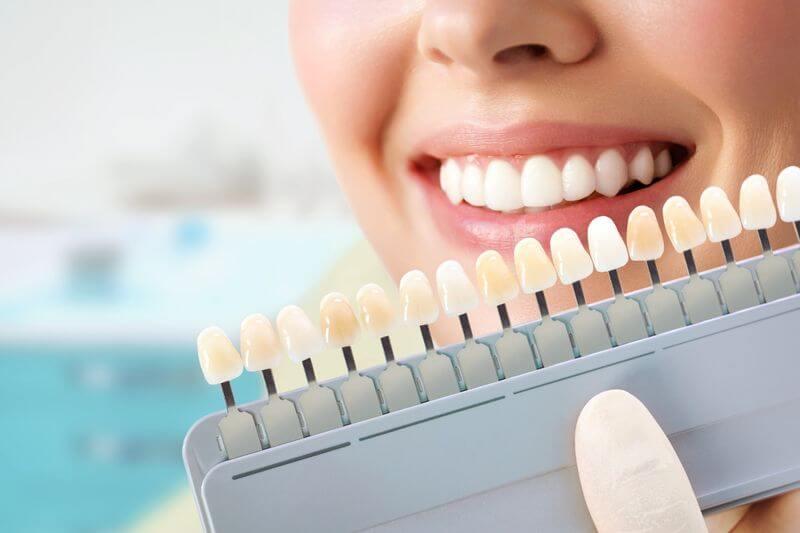
First, the terms
- Laminate veneer (lamina, yaprak porselen). A layer of ceramic, often thinner than a millimetre, bonded to the front of the tooth. It changes colour and shape. In most cases a thin layer of enamel is removed from the front of the tooth. More: laminate veneers.
- Crown (full coverage). A cap that surrounds the tooth on every side. The tooth is reduced on all its surfaces. Crowns are named after their material: e.max (lithium disilicate), zirconia, metal-ceramic (porcelain fused to metal).
- Bonding (shaping with composite). Tooth-coloured filling material added directly to the tooth. It is usually done in one appointment without cutting the tooth; no laboratory is needed.
- Whitening. A chemical process that lightens the tooth's own colour; nothing is added to the tooth. More: teeth whitening.
- Orthodontics. Moves the teeth with braces or clear aligners; it does not change the shape of the tooth.
The problem to avoid is crowning young, healthy teeth purely for their appearance. That is why the order on this page starts with the option that changes the tooth least.
Options: from the least to the most change to the tooth
- Doing nothing. If there is no underlying disease, appearance is a matter of preference. Waiting is a valid option.
- Whitening. The first step if colour is the only complaint. The effect is not permanent; it partly fades over time and is repeated. Whitening does not lighten crowns, veneers or fillings1, so existing restorations may look darker next to the whitened teeth.
- Bonding. For a small chip, a worn edge, a small gap or reshaping a single tooth. It can stain over time; it is polished, repaired or redone.
- Orthodontics. For crowding, rotated teeth and alignment problems, it moves the teeth instead of changing their shape; some plans remove a thin layer of enamel between the teeth. It takes months and needs retention afterwards.
- Laminate veneers. When colour and shape are to change together on several front teeth, or whitening or bonding has not given a good enough result; enough enamel is needed. Usually cannot be undone.
- Crown. For teeth with a large loss of structure where a veneer is not enough; chosen when the healthy tissue left is not enough for a filling or an onlay. A fracture or root canal treatment does not on its own mean a crown is needed. For the choice of material, see the e.max, zirconia and metal-ceramic pages.
The options for gaps between the teeth are compared on a separate page on gap treatment.
| Whitening | Bonding | Orthodontics | Laminate veneer | Crown | |
|---|---|---|---|---|---|
| Is tissue removed from the tooth? | No | Usually not, or very little | Usually not; some plans remove a thin layer of enamel between the teeth | Usually a thin layer of enamel | Yes, from every surface of the tooth |
| Can it be undone? | Nothing is removed from the tooth; the colour partly fades over time | Not fully; the tooth surface is treated so that the material bonds | Not fully; teeth can move back if retention is stopped, and enamel removed between the teeth does not grow back | Usually not | No |
| Does it change colour? | Yes, it lightens the tooth's own colour | Yes, where material is added | No | Yes | Yes |
| Does it change shape? | No | Yes, to a limited extent | No; it changes position | Yes | Yes |
| Time | One appointment, or a few weeks at home | Usually one appointment | Months | More than one appointment | More than one appointment |
| Effect on the tooth's nerve | Temporary sensitivity, which usually passes within days | Our sources give no figure | Our sources give no figure | Our sources give no separate figure for veneers | The nerve can lose its vitality; see "Crown or veneer?" |
| Over time | Colour partly fades | Stains and roughens; is redone | Teeth shift if retention is stopped | Can fracture or come off | Can fracture; the edge at the gum may show |
Which route for your complaint?
Colour only
Whitening is tried first. The response depends on the cause of the discolouration: in suitable conditions, a tooth that has had root canal treatment can be whitened from the inside (in rare cases, this has been linked to resorption of the root surface near the gum2; the source gives no rate), and tetracycline staining can be treated with longer whitening. Where whitening does not give a good enough result, and for developmental enamel defects, bonding or a veneer is considered.
A small chip, a worn edge or a flaw in the shape of one tooth
Bonding is the first option. If you do not like the result, or you do not want to keep renewing the composite, a veneer is assessed.
Colour and shape together on several front teeth
Veneers may be suitable. The conditions are enough enamel, healthy gums and no active decay. Clenching or grinding increases the risk of fracture, and for that reason veneers may not suit some patients. A night guard may be recommended; limited observational data on veneers3 suggest it may reduce the risk of fracture, but the protection is not certain.
Crowded, rotated or protruding teeth
Orthodontics corrects alignment by moving the teeth rather than changing their shape; some plans remove a thin layer of enamel between the teeth. "Straightening" crowded teeth with veneers or crowns means removing a great deal of tissue, which is why orthodontics is assessed first.
Large loss of structure, a fracture, a root-filled tooth or a large filling
A crown is a common choice; it protects a weakened tooth from fracture. Root canal treatment or a large filling does not on its own mean a crown is needed: if enough healthy tissue remains, a filling or an onlay, which partly covers the chewing surface of the tooth, may be enough. The decision depends on the remaining tissue, the position of the tooth and the bite.
Who it is not for
- People with active decay or gum disease. These are treated first.
- People who want a crown on a healthy, straight tooth only to make it whiter. Whitening is tried first; if it is not enough, bonding or a veneer changes the tooth far less than a crown.
- Teeth that are still developing. In young patients, veneers and crowns placed for appearance are usually postponed.
- Uncontrolled clenching and grinding. The risk of the ceramic fracturing is high; the habit and the bite are addressed first.
This page gives general information; the option that suits you is decided by an examination, X-rays and, where needed, digital planning.
Crown or veneer?
These two treatments are often confused, and the decision cannot be undone. The difference lies in how much tissue is removed from the tooth. For a veneer, usually only a thin layer of enamel is taken from the front surface. For a crown, the tooth is reduced on every surface, and this often goes through the enamel into the dentine beneath.
The tooth's nerve. The pooled results of 37 studies cover teeth that were alive at the start and were then treated with indirect restorations such as crowns. In about 5 in every 100 of these teeth4, the nerve lost its vitality. In studies with more than ten years of follow-up, the figure was about 7 in 100. The certainty of this evidence is low. If it happens, root canal treatment is needed to keep the tooth.
Enamel. Keeping the preparation within the enamel is one of the main factors affecting how long a veneer lasts. In one retrospective study that followed 580 veneers for up to 12 years, veneers bonded to dentine were about 10 times more likely to fail5. The more the tooth is cut, the less enamel remains.
When is a crown the right choice? If much of the tooth has already been lost, a crown protects it; a veneer is not enough in that situation. A fracture or root canal treatment does not decide this on its own; what decides it is how much healthy tissue remains. On a healthy, straight front tooth, a crown for colour alone or for a small flaw in shape means reducing the tooth unnecessarily.
If you are offered a crown, ask: why is a veneer or bonding not enough for this tooth? The answer should rest on the condition of the tooth, not on a material or a package.
There is a separate guide to this decision: "Crown or veneer?"
Choosing a material: e.max, zirconia, metal-ceramic
The treatment the tooth needs is decided first, and the material second. How long a restoration lasts and which complications arise depend as much on the design, the remaining tooth tissue, the bite and care as on the material. Zirconia, often called "zirconium" in everyday speech, is referred to below by the name of the material.
- Lithium disilicate (e.max). Lets light through much as a natural tooth does; often chosen for veneers and crowns on front teeth. More: e.max crowns.
- Zirconia. High strength; used most often on back teeth and in bridges. There are no long-term data for zirconia veneers; studies are limited to an average follow-up of 2.6 years6. More: zirconia crowns.
- Metal-ceramic (porcelain fused to metal). The type of crown followed for the longest; metal may show at the gum line. More: metal-ceramic crowns.
For single crowns on natural teeth, five-year survival rates are close to one another. In a 2026 review, about 98 to 99 in every 1007 monolithic lithium disilicate crowns were still in the mouth after five years. For layered zirconia, metal-ceramic and monolithic zirconia, the figure was about 97. Similar survival does not mean that fractures and other complications are similar too; the same review reported fewer fractures and chips on single-piece crowns than on layered ones. Our sources contain no data showing that zirconia lasts longer than lithium disilicate.
How veneers and crowns are made
Veneers and crowns go through similar steps; the main difference is how much of the tooth is prepared. For a laboratory-made veneer, a small amount of enamel is removed from the front of the tooth8. For a crown, the tooth is shaped to make space for it9, and it is reduced on every surface. Both take more than one appointment. The detailed steps are on the laminate veneer and crown pages.
Examination and planning
An examination, with X-rays where needed, assesses decay, the gums, the bite and, for a veneer, the amount of enamel. Options that change the tooth less, such as whitening or bonding, are reviewed first.
Treatment first
Decay and gum disease are treated before any veneer or crown. If the surrounding teeth are to be whitened, this is done now, because the colour of the ceramic cannot be changed later.
Preparing the tooth
Under local anaesthetic, a thin layer of enamel is usually removed from the front of the tooth for a veneer; for a crown, the tooth is reduced on every surface. The tissue removed does not grow back.
Impression or digital scan
An impression or a digital scan is taken and the shade is chosen. Where needed, a temporary veneer or crown is fitted while the laboratory makes the ceramic.
Try-in and fitting
Fit, colour and bite are checked in the mouth. Once you agree, the veneer is bonded, or the crown is fixed in place, and the bite is adjusted.
Review
The bite and the fit at the gum are checked again, and you are given advice on care.

Recovery and care
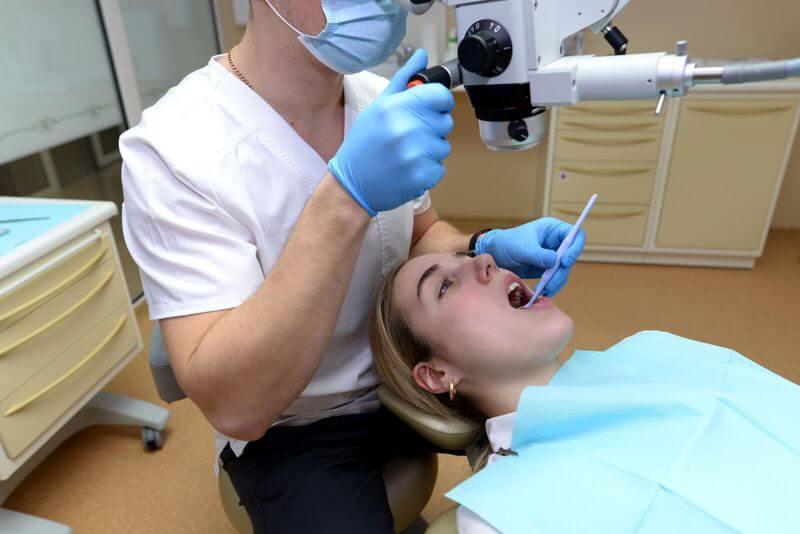
After the appointment, wait until the anaesthetic has worn off before eating or drinking, so that you do not bite your cheek or lip. The tooth may be more sensitive for a while because enamel has been removed12; sensitivity that lasts more than a week or gets worse is a reason to contact your dentist. If a temporary veneer or crown is in place, avoid hard and sticky foods.
Daily care
- Brush twice a day with a fluoride toothpaste, clean carefully along the edge at the gum, and clean between your teeth every day.
- Avoid biting hard objects, such as ice9, pens or your nails.
- If you clench or grind your teeth, a night guard may be advised.
- Keep up check-ups at the intervals set for you.
How long they last
A veneer or crown is not for life: veneers can chip, crack or come loose; small chips may be repaired, but sometimes a new veneer is needed8. Crowns can also fracture, and the edge at the gum may show over time. Good daily cleaning and regular check-ups help them last longer. The rates observed in studies are given in the next section.
How long do they last?
The rates below are not promises; they are results observed in studies. What happens in your case depends on the condition of the tooth, your bite, your habits and care.
- Veneers. According to the pooled results of studies on ceramic veneers, about 94 to 97 per cent6 of veneers are still in place after 10 years. In another review that assessed different glass ceramics together, with a shorter average follow-up, the figure is around 90 per cent13. Staying in the mouth does not mean no repair was ever needed.
- Crowns. Of every 100 single crowns on natural teeth, about 97 to 997 are still in the mouth after five years; the difference between materials is small.
- Metal-ceramic. A series of 2,340 crowns was followed in a single practice. Of the 2,211 crowns rated in good condition when they were cemented, about 97 in every 100 were still in the mouth after 10 years, and 85 after 25 years14. This series used a high-gold alloy and was carried out by a single dentist.
- Bonding. Our sources give no reliable long-term rate for bonding, so we give no figure; composite is polished, repaired or redone at intervals.
- Whitening. The effect is not permanent; the colour partly fades over time.15
When to contact a dentist
If you have a veneer or a crown, contact your dentist if any of the following happens:
- A fracture, crack or movement of the veneer or crown
- Sensitivity that lasts more than a week or gets worse
- Pain when biting, or a feeling that the tooth is high when you bite
- Bleeding, recession or a dark line in the gum along the edge
- The veneer or crown comes off completely: keep the piece, and do not try to stick it back yourself
Emergencies. Throbbing pain, facial swelling or a fever are not an expected result of a veneer or crown; see a dentist without waiting. If you have difficulty breathing or swallowing, swelling in the mouth or neck that spreads quickly, or swelling around the eye, do not wait for a dentist: go to an emergency department or call 112.
What determines the cost?
Fees are not given on this page. The main factors that shape a plan are:
- The type of treatment: whitening, bonding, veneers, crowns or orthodontics
- How many teeth are treated
- The material and how it is made
- Treatment needed first: decay, gum treatment, root canal treatment
- Temporary restorations and check-up appointments
Ask for the plan in writing: which treatment is proposed for which tooth, why, and what is included. A plan that proposes the same treatment for every tooth in the mouth needs a reason for each tooth.

Frequently Asked Questions
Is a "kaplama" the same thing as a veneer?
No. A veneer is a thin ceramic layer bonded to the front of the tooth; a crown covers the whole tooth, which is reduced on every surface. In everyday Turkish both are called "kaplama", so ask clearly which one you are being offered.
Can a healthy tooth have a veneer or a crown?
A healthy tooth is not crowned just for colour; whitening is tried first, and bonding or a veneer changes the tooth far less than a crown. Veneers are considered when colour and shape change together on several front teeth, or whitening or bonding was not enough; they need enough enamel and usually cannot be undone.
Should I have my teeth whitened before veneers or crowns?
If the surrounding teeth are to be whitened, this is done first: the colour of ceramic does not change later, so it is matched to the whitened teeth. After whitening, there is a wait for the colour to settle before bonding; your dentist sets how long, depending on the method.
Do veneers or crowns damage the tooth?
Enamel is always removed for a crown and usually for a veneer, and that cannot be undone. In studies of crowns and other indirect restorations on teeth that were alive at the start, the nerve lost its vitality in about 5 in every 100. There is no separate figure for veneers, and this evidence is of low certainty.
Which type lasts longest?
In studies, about 94 to 97 per cent of ceramic veneers were in place after 10 years, and 97 to 99 in 100 single crowns after five years. These come from different patients and follow-up times, so they cannot be compared directly. The tooth, bite and care matter as much as the material.
I clench my teeth. Can I have veneers or crowns?
Clenching and grinding raise the risk of ceramic fracturing, so veneers may not suit some patients; if a crown is needed, a stronger material is chosen. A night guard may be advised; limited data on veneers suggest it may reduce fractures, but it is not certain protection. This is decided at an examination.3
I have been offered veneers or crowns on all my front teeth. Is that right?
Proposing the same treatment for every tooth needs a reason for each tooth. Ask why bonding or whitening is not enough for each one. The answer should rest on the condition of the tooth, not on a package or a material name.
Is there an age limit for veneers or crowns?
This page gives no upper age limit. In young patients whose teeth are still developing, veneers and crowns placed for appearance are usually postponed. At any age, active decay and gum disease are treated first, and a veneer needs enough enamel.

Dt. Dilek AKSU GÜLER
Dentist · Founder
She has completed advanced training in implantology and works in aesthetic restorations and smile design.
Sources
- Teeth Whitening (patient information). American Dental Association, MouthHealthy.↩mouthhealthy.org
- Oral Health Topics: Whitening. American Dental Association (ADA Library & Archives), last updated 16 August 2022. 2022.↩ada.org
- Porcelain veneers in patients with bruxism: 323 veneers in 70 patients, 3-11 years. Medicina Oral Patologia Oral y Cirugia Bucal 2014. 2014.↩pmc.ncbi.nlm.nih.gov
- Incidence of pulp necrosis and periapical pathosis after indirect restorations: systematic review and meta-analysis (37 studies, 11,615 teeth). BMC Oral Health 2023. 2023.↩pmc.ncbi.nlm.nih.gov
- Porcelain laminate veneers, 580 veneers up to 12 years: effect of preparation in enamel versus dentin. International Journal of Periodontics & Restorative Dentistry 2013;33(1):31-39. 2013.↩doi.org
- Survival and complication rates of ceramic laminate veneers by material: systematic review and meta-analysis (29 studies). Journal of Esthetic and Restorative Dentistry 2025;37(3):601-619. 2025.↩doi.org
- Survival of monolithic lithium disilicate, monolithic zirconia and metal-ceramic single crowns: systematic review. International Journal of Prosthodontics 2026;39(3):308-324. 2026.↩doi.org
- Veneers (patient information). Oral Health Foundation (UK charity); published January 2017, updated April 2026. 2026.↩dentalhealth.org
- What are dental crowns? (patient information). Oral Health Foundation (UK charity).↩dentalhealth.org
- Survival and failure causes of ceramic laminate veneers: systematic review (25 studies, 6,500 veneers, 3-21 years). Journal of Clinical Medicine 2021;10(5):1074. 2021.↩pmc.ncbi.nlm.nih.gov
- Veneers. American Dental Association, MouthHealthy.↩mouthhealthy.org
- Veneers. healthdirect Australia (government-funded health information), last reviewed February 2025. 2025.↩healthdirect.gov.au
- Clinical survival of glass-ceramic restorations: meta-analysis of 46 articles. Journal of Prosthetic Dentistry 2024;132(5):879.e1-e13. 2024.↩doi.org
- High-gold metal-ceramic single crowns in one practice: up to 25 years (2,340 crowns). International Journal of Prosthodontics 2013;26(2):151-160. 2013.↩pubmed.ncbi.nlm.nih.gov
- Tooth bleaching: umbrella review of 28 systematic reviews (416 randomised trials). Heliyon 2024. 2024.↩pmc.ncbi.nlm.nih.gov