What is teeth whitening?
Teeth whitening lightens the colour of the teeth with a gel that contains peroxide. No tissue is removed from the tooth, so once the cause of the discolouration has been assessed, it is the first option to consider when colour is the concern. It can be done in the clinic with a high-concentration gel, or at home with a low-concentration gel in trays made by your dentist. Once a suitable programme has been completed, the two routes give similar results on average.
Whitening only affects natural tooth tissue. It does not change the colour of fillings, laminate veneers (thin shells that cover the front of a tooth) or crowns (caps that cover the whole tooth). The effect is not permanent: the colour partly returns over time.1
- It lightens the colour without removing tissue from the tooth; for a colour concern, it should be considered before crowns or veneers.
- Home whitening supervised by a dentist and in-clinic whitening give similar results on average once the programme is completed.
- The most common side effect is temporary sensitivity; the effect is not permanent, and it does not change the colour of fillings, veneers or crowns.
Who it suits, and who it does not
Where it may be suitable
- Healthy teeth that have darkened with age, or from tea, coffee or smoking
- Lightening the natural colour of the teeth first, when crowns, veneers or another cosmetic procedure are being considered
Where it is not suitable, or other treatment is needed first
- Under-18s. Under EU rules, whitening products are not used on anyone under 18 (see the product rules below).
- Pregnancy and breastfeeding. Whitening is postponed because there are not enough safety data.
- Untreated decay, gum disease or cracks. Whitening can make pain or irritation worse; these are treated first.
- Exposed root surfaces and marked sensitivity. Sensitivity may increase.
- Allergy to peroxide.
Where its effect is limited
- Fillings, laminate veneers and crowns. Their colour does not lighten. If you have restorations like these on your front teeth, they may need replacing after whitening so that the colours match.
- Discolouration caused by medicines. Dark discolouration caused by some medicines responds to whitening more slowly and to a limited degree; a longer course may be needed.
- A root-filled tooth that has darkened. It responds only partly to whitening from the outside. In suitable teeth, a separate procedure can whiten the tooth from the inside: the condition of the root filling is assessed and a protective barrier is placed inside the tooth. Rarely, this internal whitening has been followed by loss of tissue from the outer surface of the root near the gumline (external cervical resorption).
Whether whitening suits you is assessed at an examination, with X-rays where needed.
What methods are there, and how do they differ?
- Doing nothing, or a professional clean only. If the discolouration comes from surface staining, scaling and polishing may be enough.
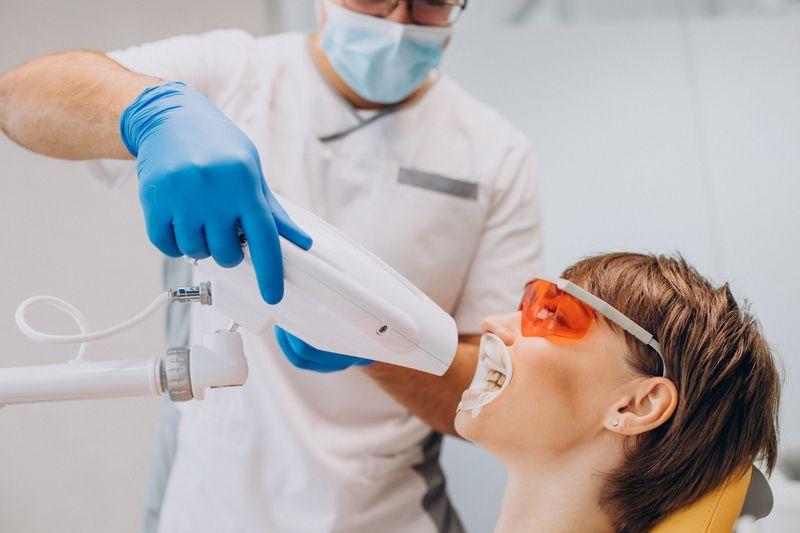
- In-clinic whitening. The gums are protected and a high-concentration gel is applied to the teeth. The result starts to show the same day; the colour settles over a few days as the teeth regain their moisture.
- Home whitening. Trays are made to fit your teeth, and you apply a low-concentration gel at home for as long as your dentist tells you. The result appears gradually over several days.
- Both together. Whitening started in the clinic is continued at home with a low-concentration gel.
A review covering hundreds of clinical studies compared the two routes. Once a suitable programme has been completed, home and in-clinic whitening supervised by a dentist give a similar colour change on average1; the number of sessions and the time needed vary from person to person. So the choice of method depends less on the result than on your time, how prone you are to sensitivity and what you prefer.
Light and laser
Routine use of light, LED or laser has not been shown to add a clear benefit2 to whitening; the evidence on some specific protocols is limited, and some laser protocols can increase sensitivity.
Over-the-counter and dentist-only products
Under EU cosmetics law, products with up to 0.1% hydrogen peroxide are sold freely3. Products with more than 0.1% and up to 6% are sold only to dental practitioners. The first use of each course is carried out by a dental practitioner or under their supervision. These products are not used on anyone under 18. Products above 6% are not permitted as cosmetics. In Turkey, whitening products containing or releasing up to 6% hydrogen peroxide are classed as cosmetics4, not medical devices. The sales conditions above are EU rules; the Turkish announcement does not restate them.
Products on free sale contain very little peroxide. Highly abrasive products and hard brushing can increase wear, especially on exposed root surfaces; ask your dentist which toothpaste suits you.

| In the clinic | At home (supervised by your dentist) | |
|---|---|---|
| Gel concentration | High | Low |
| When the result shows | Starts the same day, settles over a few days | Gradually, over several days |
| Who applies it | The dentist | You, following your dentist's instructions |
| How the gums are protected | With a barrier placed by the dentist | With a custom-made tray |
| Colour change | Similar | Similar |
How is teeth whitening done?
An examination comes first; any decay, cracks or gum problems are treated before whitening. Your starting shade is recorded.
Examination and cleaning
The teeth and gums are assessed. Scaling is done if needed; surface stains are removed before whitening.
In the clinic: protecting the gums
For in-clinic whitening, the lips and gums are covered with a barrier; the high-concentration gel must not touch the soft tissues.
In the clinic: applying the gel
The gel is spread on the front surfaces of the teeth and left for the time your dentist sets. It may be applied again in the same session.
At home: trays and gel
For the home method, you are given trays made to fit your teeth and the gel, with instructions on how much gel to use and how long to wear the trays.
Review
The shade reached is recorded; if there is sensitivity, a desensitising treatment is applied, and you are given advice on care.

Risks and benefits
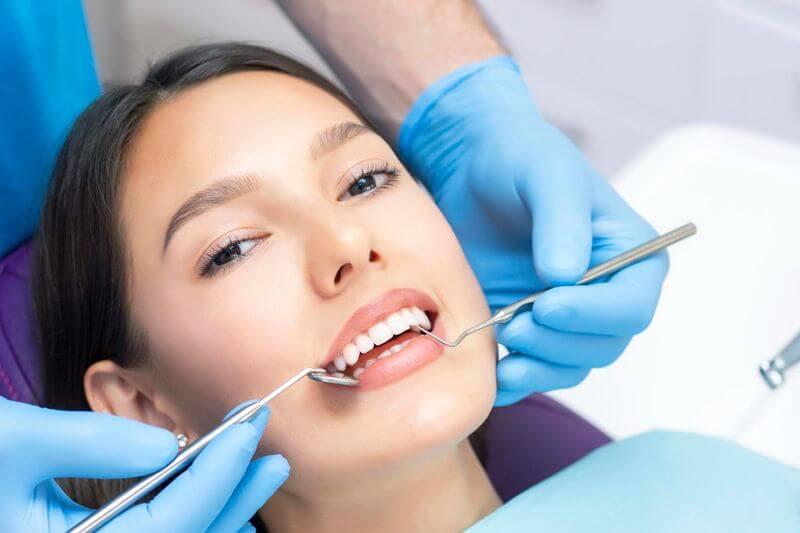
Risks and side effects
- Tooth sensitivity. This is the most common side effect. The risk is higher with some high-concentration products5; it also depends on the active ingredient, how long the gel is applied and the person. According to reviews, it usually passes within two to three days1. Desensitising treatments containing potassium nitrate or fluoride reduce sensitivity2 without reducing the whitening effect.
- Gum irritation. If the gel touches the gums, it can cause burning and white patches. That is why the gums are protected in the clinic; at home, putting too much gel in the tray also leads to overflow and irritation.
- Uneven colour. Fillings, laminate veneers and crowns do not whiten; a colour difference can appear between them and the natural teeth.
- Less change than expected. Not every tooth lightens to the same degree; the shade that will be reached cannot be predicted exactly in advance.
- Colour returning. The colour partly returns over time; the treatment may need repeating.
Benefits
- No tissue is removed from the tooth.
- It is far less invasive than irreversible procedures such as crowns.
- If the result is not enough, your dentist can still assess the other options.
After treatment, and daily care
In the first days after treatment, the teeth may be sensitive to hot and cold. Avoiding very hot and very cold food and drink, and using a desensitising toothpaste, helps during this time.
Keeping the colour in the long term
- Tea, coffee, red wine and smoking stain the teeth again over time; cutting down on them keeps the colour longer.
- Brush twice a day with a fluoride toothpaste, and clean between your teeth every day.
- Keep up regular check-ups and cleans.
How long does the effect last?
The effect of whitening is not permanent. The colour partly returns over time; how long the effect lasts depends on the person, the method used and habits such as diet and smoking. Whether it needs repeating is assessed at check-ups.1
When to contact a dentist
During home whitening, if you have marked pain or a burning feeling in the gums, stop, take the tray out, rinse your mouth with water and talk to your dentist before starting again.
Contact your dentist if any of the following happens:
- Sensitivity that lasts more than a few days or keeps getting worse
- Throbbing toothache that starts on its own
- Burning, a sore or white patches on the gums that do not go away
Swallowing gel. If you swallow more than a trace of gel, or feel unwell after swallowing it, get medical advice without waiting and keep the product packaging with you.
Emergencies. Facial swelling, a fever or severe pain are not an expected result of whitening; see a dentist without waiting. If you have difficulty breathing or swallowing, go to an emergency department. The emergency number is 112.
What determines the cost?
Fees are not given on this page. The main factors that shape the plan are:
- The method chosen: in the clinic, at home, or both
- Treatment needed first: cleaning, fillings, gum treatment
- For home whitening, making the trays and the amount of gel
- Replacing fillings, crowns or veneers whose colour no longer matches after whitening
Ask for the plan in writing, including what it covers.
Frequently Asked Questions
Does teeth whitening damage the teeth?
Done under a dentist's supervision and within the instructed times, its most common side effect is temporary sensitivity. Using it for longer or more often than instructed increases sensitivity and gum irritation. Whitening is not done while there is decay, a crack or gum disease.
Will my fillings, veneers and crowns whiten too?
No. Whitening only affects natural tooth tissue. If you have restorations like these on your front teeth, they may need replacing after whitening so that the colours match; discuss this with your dentist before treatment.
Can brushing whiten yellow teeth?
Brushing and a professional clean remove surface stains; they do not change the tooth's own colour. Highly abrasive products and hard brushing can increase wear, especially on exposed root surfaces.
My root-filled tooth has darkened. Can it be whitened?
This kind of discolouration comes from inside the tooth and responds only partly to whitening from the outside. Options such as whitening from inside the tooth, or a restoration, are assessed at an examination.
Should I have whitening before a crown or veneer?
It is not essential. To lighten your natural teeth, whiten before the crown's shade is chosen, as it cannot be changed later, then wait as your dentist advises so the colour settles and the crown or veneer can be bonded reliably to the tooth. If colour is your only concern, a crown may not be needed.
Does whitening make teeth sensitive?
It can. Temporary sensitivity is the most common side effect, and according to reviews it usually passes within two to three days. Desensitising treatments can reduce it without reducing the whitening effect.
Does a light or laser make whitening work better?
Routine use of light, LED or laser has not been shown to add a clear benefit to whitening, and some laser protocols can increase sensitivity.

Dt. Dilek AKSU GÜLER
Dentist · Founder
She has completed advanced training in implantology and works in aesthetic restorations and smile design.
Sources
- Tooth bleaching: umbrella review of 28 systematic reviews (416 randomised trials). Heliyon 2024. 2024.↩pmc.ncbi.nlm.nih.gov
- In-office tooth bleaching protocols: umbrella review of 24 systematic reviews. 2026 (PMC13031690). 2026.↩pmc.ncbi.nlm.nih.gov
- Regulation (EC) No 1223/2009, Annex III entry 12: hydrogen peroxide in oral products. European Union (read via CosIng checker, secondary).↩cosingchecker.com
- Diş beyazlatıcı ürünler hakkında duyuru (27.12.2018). TİTCK (Türkiye İlaç ve Tıbbi Cihaz Kurumu). 2018.↩titck.gov.tr
- Tooth sensitivity with different bleaching agents and concentrations: Bayesian network meta-analysis (77 studies). Journal of Dentistry 2025. 2025.↩doi.org