
Can dental plaque be dissolved?
Plaque is removed by brushing and cleaning between your teeth every day. No rinse, toothpaste, food or home remedy has been shown to dissolve it or replace that cleaning. Once plaque hardens into tartar, it can only be removed by a dentist or hygienist, so any tartar you can see or feel needs a dental visit.
- Plaque is a soft film that comes off with a brush and interdental cleaning; no rinse or remedy has been shown to replace that.
- Tartar is hardened plaque and needs professional cleaning; no home method has been shown to remove it.
- Some rinses reduce plaque on top of brushing, chlorhexidine considerably, but none replaces brushing or removes tartar.
- How often you need a professional clean depends on your gums, not on a fixed six-month rule.
Plaque and tartar: what is the difference?
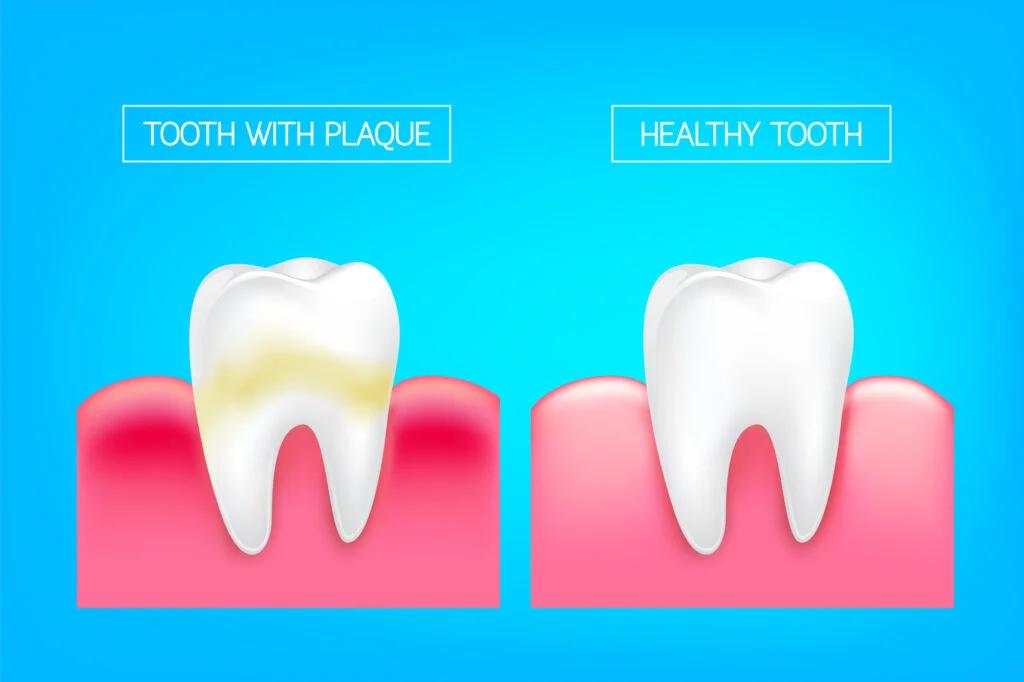
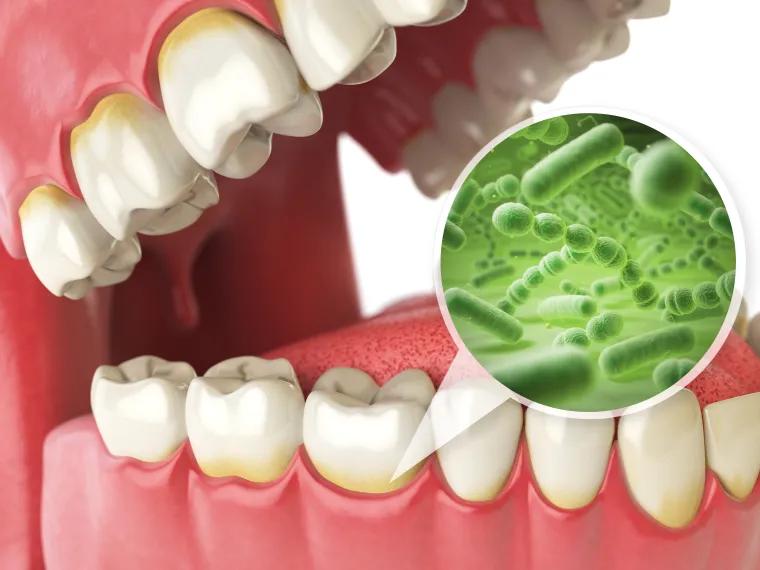
Plaque is a soft, sticky film of bacteria that forms on teeth every day, most of all along the gum line and between the teeth. Left there, it inflames the gums, which then bleed easily, and it feeds tooth decay. Scottish dental guidance (SDCEP) states that this early gum inflammation (gingivitis) is reversible with improved self-care1.
Tartar, also called calculus, is plaque that has hardened. The American Dental Association describes it as a hard mineral deposit that can only be removed through cleaning performed by a dental professional2. It is rough, so fresh plaque sticks to it, and it can form above and below the gum line.
That difference decides what you can do yourself. Plaque is your job, every day. Tartar is the dentist's or hygienist's.
What removes plaque at home
Plaque is removed mechanically: something has to wipe it off the tooth.
- Brush twice a day for about two minutes. UK guidance recommends brushing at least twice daily with fluoride toothpaste3, including last thing at night, and spitting out the excess rather than rinsing. A small-headed brush with soft or medium bristles suits most people. Aim the bristles at the gum line, where plaque collects.
- Manual or electric: both work. The same guidance says both types are effective for plaque control. A Cochrane review found that electric brushes lowered plaque scores slightly more over periods longer than three months, by about 21% on a standard plaque index (Quigley-Hein)4, with the clinical importance unclear. The brush you use well matters more than the type.
- Clean between your teeth every day. A toothbrush does not reach between the teeth. A Cochrane review found that interdental brushes used with brushing may reduce plaque5 and that floss may reduce gum inflammation, although the evidence is of low certainty and the effects may not be clinically important. Interdental brushes that fit your gaps are usually easier than floss; floss suits tight contacts.
- Check where you miss. Plaque-disclosing tablets colour the plaque left behind, so you can see where to brush better.
Rinses and home remedies: an honest verdict
Many products and recipes promise to dissolve plaque or tartar. None of the sources we use shows any of them removing tartar, and none replaces brushing.
- Chlorhexidine mouthwash (an antiseptic rinse). A Cochrane review found a large reduction in plaque6 on top of brushing, but in people with mild gum inflammation the improvement in the gums was not considered clinically relevant. It stained teeth in trials of four to six weeks, can change taste and irritate the mouth, and is meant for short periods on a dentist's advice. It is not a tartar remedy.
- Oil pulling (swishing coconut or sesame oil). A review of 25 short trials rated the evidence of very low certainty7; chlorhexidine reduced plaque more than oil pulling.
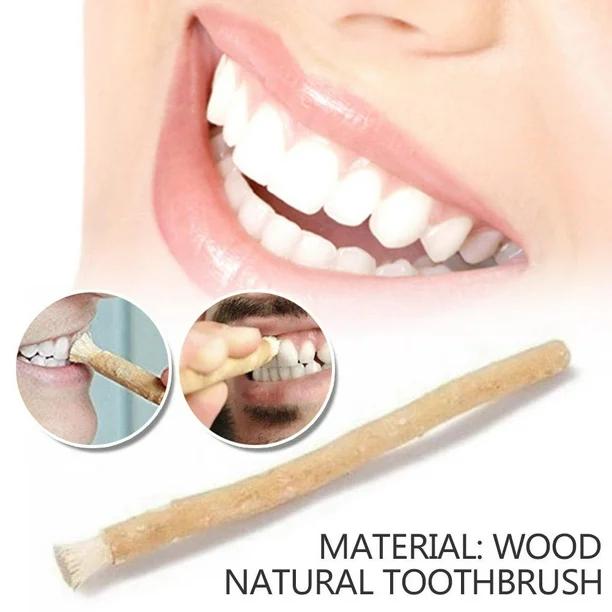
- Miswak (a chewing stick). Used on top of brushing it reduced plaque in a review of 10 studies (9 analysed), and on its own it was comparable to a toothbrush8; how often and how it was used was poorly reported. It is a cleaning tool, not a dissolver.
- Vinegar, lemon, baking soda and other kitchen recipes. Not assessed for plaque or tartar by any source we use, so we make no claim that they work. The American Dental Association notes that studies of home whitening with acidic fruits and vinegar raise questions about their safety9. If you are thinking of trying one, ask your dentist first.
If you see hard, yellow or brown deposits along the gum line or behind the lower front teeth, no product will shift them. Book a clean.
Professional cleaning: what it does and how often
A dentist or hygienist removes tartar with hand instruments or an ultrasonic scaler and polishes the teeth. In people with gum disease (periodontitis), deeper cleaning below the gum line is a core step of treatment: the European periodontology guideline recommends it10 for stage I-III periodontitis, followed by regular supportive care at intervals set between 3 and 12 months according to each person's risk.
For adults whose gums are in better shape, the question is how often. A Cochrane review of two UK trials followed 1,711 adults without severe gum disease who saw their dentist regularly for two to three years. A routine scale and polish every 6 or 12 months made little or no difference to gum inflammation11 compared with no scheduled cleaning, and slightly reduced tartar; the importance of that small reduction is unclear.
In practice, how often you need a professional clean depends on your own gums, how quickly you build tartar and whether you have had gum disease. Your dentist sets that interval with you. Treatment for gum disease is explained on the gum disease treatment page.
When to see a dentist
Book an appointment if you can see or feel tartar, if your gums bleed when you brush12 or are sore or swollen, or if bad breath does not go away with cleaning. The NHS also advises seeing a dentist if a child has sore, bleeding gums.
Ask for an urgent appointment if your teeth feel loose, your gums are very sore and swollen, or you have ulcers, red patches or a lump in your mouth or on your lip.
Emergencies. Call 112 or go to the nearest emergency department if you:
- find it hard to breathe, speak or swallow13
- have a swollen or painful eye, sudden problems with your eyesight, or swelling in your neck14
- have a lot of swelling inside your mouth
- find it hard to open your mouth
Frequently asked questions
Can I remove tartar at home?
No. Tartar is hardened plaque and can only be removed by a dentist or hygienist. Do not try to scrape it off with sharp objects. Daily brushing and cleaning between the teeth keep new plaque from hardening.
Does baking soda or vinegar dissolve plaque?
We found no evidence that either dissolves plaque or tartar, and we make no claim for them. Plaque is removed by brushing and cleaning between the teeth; tartar needs a dental professional.
Which mouthwash removes plaque?
No mouthwash removes plaque on its own. Chlorhexidine reduces plaque on top of brushing, but it stains teeth and is used for short periods on a dentist's advice. Other antiseptic rinses have weaker evidence. None removes tartar.
Is an electric toothbrush better for plaque?
Slightly, in trials: electric brushes lowered plaque scores a little more than manual ones, with unclear clinical importance. Both work if used well, twice a day for about two minutes.
How often should I have my teeth professionally cleaned?
It depends on your gums. For regular attenders without severe gum disease, a routine clean every 6 or 12 months made little difference to gum inflammation in trials, but slightly reduced tartar. Your dentist sets your interval.
Dt. Dilek AKSU GÜLER
Dentist · Founder
She has completed advanced training in implantology and works in aesthetic restorations and smile design.
Sources
- Prevention and Treatment of Periodontal Diseases in Primary Care, 2nd edition. Scottish Dental Clinical Effectiveness Programme (SDCEP), February 2024. 2024.↩periodontalcare.sdcep.org.uk
- Dental Floss/Interdental Cleaners (Oral Health Topics). American Dental Association, last updated August 2026. 2026.↩ada.org
- Delivering Better Oral Health, Chapter 8: Oral hygiene. Department of Health and Social Care / NHS England et al., updated 10 September 2025. 2025.↩gov.uk
- Powered versus manual toothbrushing for oral health. Cochrane Database of Systematic Reviews 2014;6:CD002281. 2014.↩doi.org
- Home use of interdental cleaning devices, in addition to toothbrushing, for preventing and controlling periodontal diseases and dental caries. Cochrane Database of Systematic Reviews 2019;4:CD012018. 2019.↩doi.org
- Chlorhexidine mouthrinse as an adjunctive treatment for gingival health. Cochrane Database of Systematic Reviews 2017;3:CD008676. 2017.↩doi.org
- The effect of oil pulling in comparison with chlorhexidine and other mouthwash interventions in promoting oral health: a systematic review and meta-analysis. International Journal of Dental Hygiene 2024;22(1):78-94. 2024.↩doi.org
- The effectiveness of miswak practices in reducing plaque and gingivitis among adults: a systematic review and meta-analysis. Journal of Ethnopharmacology 2022;298:115598. 2022.↩doi.org
- Oral Health Topics: Whitening. American Dental Association (ADA Library & Archives), last updated 16 August 2022. 2022.↩ada.org
- Treatment of stage I-III periodontitis - the EFP S3 level clinical practice guideline. Journal of Clinical Periodontology 2020;47 Suppl 22:4-60 (erratum 2021;48:163). 2020.↩doi.org
- Routine scale and polish for periodontal health in adults. Cochrane Database of Systematic Reviews 2018;12:CD004625. 2018.↩doi.org
- Gum disease. NHS, page last reviewed 20 April 2026. 2026.↩nhs.uk
- NHS: Dental abscess. NHS (nhs.uk). 2026.↩nhs.uk
- NHS: Toothache. NHS (nhs.uk). 2024.↩nhs.uk