
Is it enough not to smoke for 48 hours?
We have found no study showing that 48 hours without smoking is enough to protect a new implant. What the research does show is that people who smoke lose implants more often1 than non-smokers, including early losses while the implant heals2. The risk rises with the number of cigarettes, and no number has been shown to be safe.
Below: what the studies measured, why 48 hours cannot be taken as a safe limit, how to plan stopping with your dentist, and what to do if you have already smoked.
- In people smoking more than 20 cigarettes a day, implant loss was about 2.5 times as likely per implant as in non-smokers.
- Smoking is also linked to implants lost early, while they are still healing into the bone.
- The reviews cited here did not test a smoke-free period, of 48 hours or any other length.
- Tell your dentist that you smoke before any implant is planned; you and your dentist agree when to stop and for how long.
What the studies found
Two systematic reviews have pooled the research on smoking and dental implants.
- Implant loss overall. A 2020 review of 23 studies compared people who smoked more than 20 cigarettes a day with non-smokers. Implant loss was about 2.5 times as likely per implant1, and about 4 times as likely per patient. The risk rose with the number of cigarettes a day, and no safe number was shown.
- Early loss. Early failure means an implant that does not fuse with the bone and is lost during healing. A 2024 review of 32 studies, covering 59,246 implants in 14,115 patients, looked at this. In its implant-level analysis (21 cohorts) the odds ratio was about 2.62; in its patient-level analysis (30 cohorts) it was about 2. A cohort is a group of patients followed over time. An odds ratio is not directly a "times as likely" figure. The authors also note that it is uncertain how large the effect of smoking is.
What these figures do not tell you
- They show an association, not proof of cause. Both reviews pooled observational studies, in which people were not assigned to smoke or not.
- They did not test stopping. Neither review studied what happens when someone stops smoking, so they cannot say whether stopping brings the risk back to a non-smoker's level.
- They are not a prediction for one person. They compare groups of people. They give no single absolute risk for a smoker, and we do not turn them into one.
Smoking is one of several factors linked to implant loss; a history of gum disease and clenching are others. How dental implant treatment is planned around them is explained on its own page, and for a whole jaw on the All-on-4 page.
Is there evidence for the 48-hour rule?
Advice not to smoke for the first 48 hours after surgery is common, and an earlier version of this article repeated it. We have found no study that tests it. The reviews above compared smokers with non-smokers and counted cigarettes a day. Neither measured a smoke-free period of any length, before or after surgery.
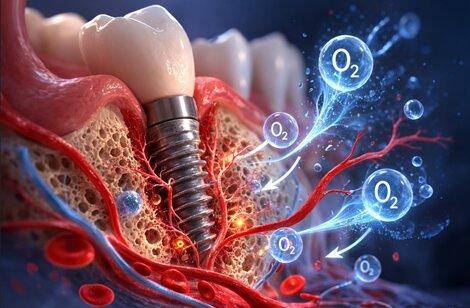
So we have found no evidence that smoking again on the third day is safe, or that the risk changes at 48 hours. An implant takes months, not days, to fuse with the bone, and the early-failure review links smoking to losses during that healing phase2. A rule that covers only the first two days leaves most of that time uncovered.
When to stop, and for how long
- Tell your dentist that you smoke, and how much. It is part of the assessment before any implant, together with gum disease, diabetes, clenching and the medicines you take.
- Agree the stopping period before surgery. Your dentist tells you when to stop before surgery and how long to stay smoke-free afterwards. Smoking again after that period has not been shown to be safe. We ask patients not to smoke during the healing period, and the period for your treatment is written into your aftercare instructions.
- Cutting down is not the same as stopping. In the 2020 review the risk was higher with more cigarettes a day, but no number was shown to be safe.
- E-cigarettes and heated tobacco. The reviews on this page are about cigarettes. We have no reviewed evidence on e-cigarettes or heated tobacco and implants, so we cannot say they are safer. Ask your dentist before you use them during healing.
- Help to stop. Nicotine patches and gum are used to help people stop smoking; the reviews on this page did not study them with implants. If you want to stop for good, your family doctor can tell you what support is available. Tell your dentist what you use.
Once the implant is in use
After healing, regular checks keep track of the implant. When the tooth on the implant is completed, an X-ray and gum measurements around the implant are taken as a baseline3. Later changes are compared with them. The European Federation of Periodontology's guideline calls for a care programme with regular assessment4 once implants are in use. Your review interval is set by your own risk, so tell your dentist at each check whether you still smoke.
If you have already smoked, and when to contact a dentist
If you smoked in the first days after surgery, do not panic. A higher risk across a group of people does not mean that your implant will fail. Stop now, keep to your aftercare instructions and let your dentist know.
Contact your dentist if you notice any of these signs:
- Pain or swelling that increases after the third day, or bleeding that does not stop
- A bad taste, a bad smell or discharge around the implant
- The gum over the implant opens
- The implant, or a temporary tooth on it, feels loose
- A fever, or feeling generally unwell
Emergencies. Difficulty breathing or swallowing, rapidly spreading swelling of the face or neck, high fever or swelling around the eye are serious signs. If you have any of them, do not wait for the clinic's reply. Go to the nearest emergency department or call 112.
Frequently asked questions
I smoked a cigarette the day after my implant. Will it fail?
Not necessarily. The studies show more implant loss in smokers as a group; they do not predict what happens to one implant. Do not smoke again during healing, follow your aftercare instructions and tell your dentist. Call if pain, swelling or discharge increases.
Is 48 hours without smoking enough?
We have found no study showing that it is. The reviews compared smokers with non-smokers; neither tested a smoke-free period of any length. Smoking is linked to implant loss during healing, which takes months. Your dentist tells you how long to stop.
Does stopping before surgery bring my risk back to normal?
The two reviews on this page did not test that, so they cannot say whether stopping returns the risk to a non-smoker's level. They do show that the risk rose with the number of cigarettes a day.
Can I have dental implants if I smoke?
It can be done, but the risk is higher. In people smoking more than 20 a day, implant loss was about 2.5 times as likely per implant as in non-smokers. Tell your dentist how much you smoke; the plan and the stopping period are discussed with you.
Are e-cigarettes or heated tobacco safer for a new implant?
We cannot say. The reviews on this page are about cigarettes, and we have no reviewed evidence on e-cigarettes or heated tobacco and implants. Ask your dentist before using them during healing. Nicotine patches and gum are used to help people stop smoking; tell your dentist if you use them.
Dt. Dilek AKSU GÜLER
Dentist · Founder
She has completed advanced training in implantology and works in aesthetic restorations and smile design.
Sources
- Levels of smoking and dental implants failure: systematic review and meta-analysis (23 articles). Journal of Clinical Periodontology 2020;47(4):518-528. 2020.↩doi.org
- Smoking in relation to early dental implant failure: systematic review and meta-analysis (32 observational studies, 59,246 implants, 14,115 patients). Journal of Dentistry 2024;151:105396. 2024.↩doi.org
- Peri-implant diseases and conditions: consensus report of workgroup 4 of the 2017 World Workshop on the Classification of Periodontal and Peri-Implant Diseases and Conditions. Journal of Clinical Periodontology 2018;45 Suppl 20:S286-S291. 2018.↩doi.org
- Prevention and treatment of peri-implant diseases: the EFP S3 level clinical practice guideline. Journal of Clinical Periodontology 2023;50 Suppl 26:4-76. 2023.↩doi.org