
What should you do on the first night after an extraction?
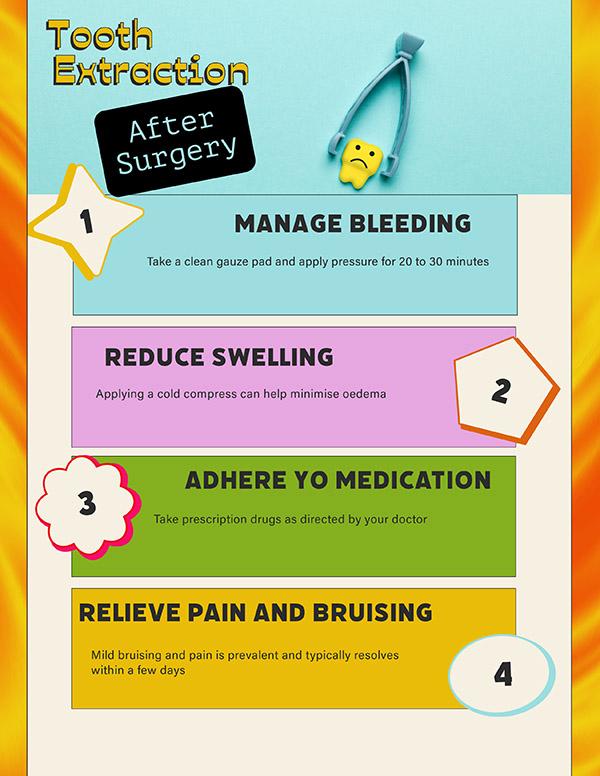
Protect the blood clot that forms in the socket. Rest, keep your head raised, eat soft food that is not hot, and do not rinse, smoke, drink alcohol or exercise that day. If the socket keeps bleeding, bite firmly on damp gauze for 20 minutes. Paracetamol or ibuprofen can ease the pain, unless you have been told to avoid them.
- Leave the socket alone: no rinsing on the day of the extraction, no smoking, no alcohol, no exercise.
- For bleeding, firm pressure on damp gauze for 20 minutes is the first step.
- If you take blood thinners, your aftercare is different: follow the advice for your situation and do not stop your medicine yourself.
- Bleeding that will not stop, or swelling that affects breathing or swallowing, needs urgent help.
Bleeding and the gauze pad
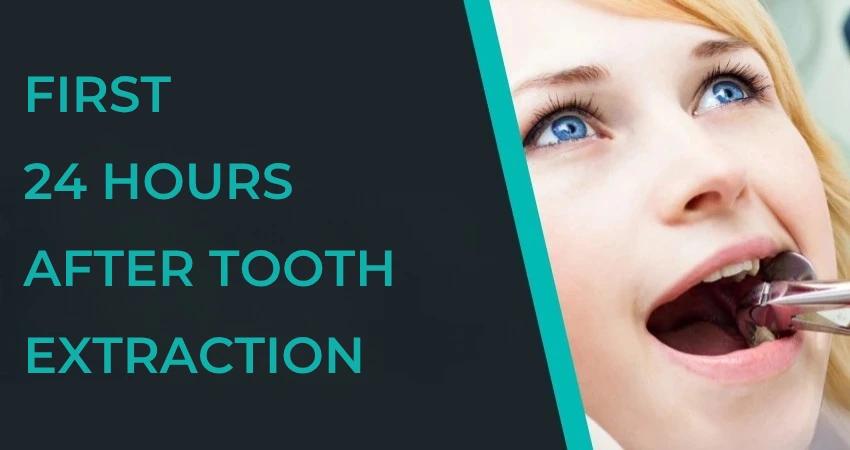
Most of the first night's advice is about not disturbing the clot that forms in the socket. A little oozing that stains your saliva pink is common; bleeding that keeps filling your mouth is not.
If the socket keeps bleeding, Scottish dental guidance (SDCEP) advises biting firmly on rolled gauze or a clean cotton pad moistened with water, for 20 minutes1 before checking. If you do not take blood thinners and it has not stopped, press once more; if it still does not stop, you need urgent care. If you do, see the next section. The NHS page on wisdom tooth removal gives a shorter time: press for at least 10 minutes2 with a clean cloth or cotton wool.
These times come from guidance, not from trials. A Cochrane review looked for trials of how to treat bleeding after an extraction and, in searches up to January 2018, found none that it could include3. So there is no single proven pressure time; firm, steady pressure is the common thread.
If you take blood thinners
People who take anticoagulant or antiplatelet medicines have their own, stricter UK leaflet:
- Pressure for longer. The leaflet advises pressing on the bleeding area for 30 minutes4, and contacting your dentist if that does not stop it.
- No second round. SDCEP's guidance for clinicians says that if bleeding in someone on these medicines fails to stop or restarts1, they should get emergency care, rather than trying pressure again.
- Pain relief. The same leaflet advises paracetamol and says to avoid anti-inflammatory painkillers such as aspirin, ibuprofen or diclofenac.
- Food. The leaflet advises avoiding hot liquids and hard foods for the rest of the day, and not chewing on the affected side.
- Rinsing. Avoid rinsing until the next day; from then on, the leaflet advises gentle warm salt-water rinses 3 or 4 times a day for 5 days.
Do not stop or change your blood thinner on your own. SDCEP's patient information says: do not alter your medication5 for dental treatment unless your doctor, specialist or dentist tells you to.
Protecting the clot: rinsing, smoking, straws and alcohol
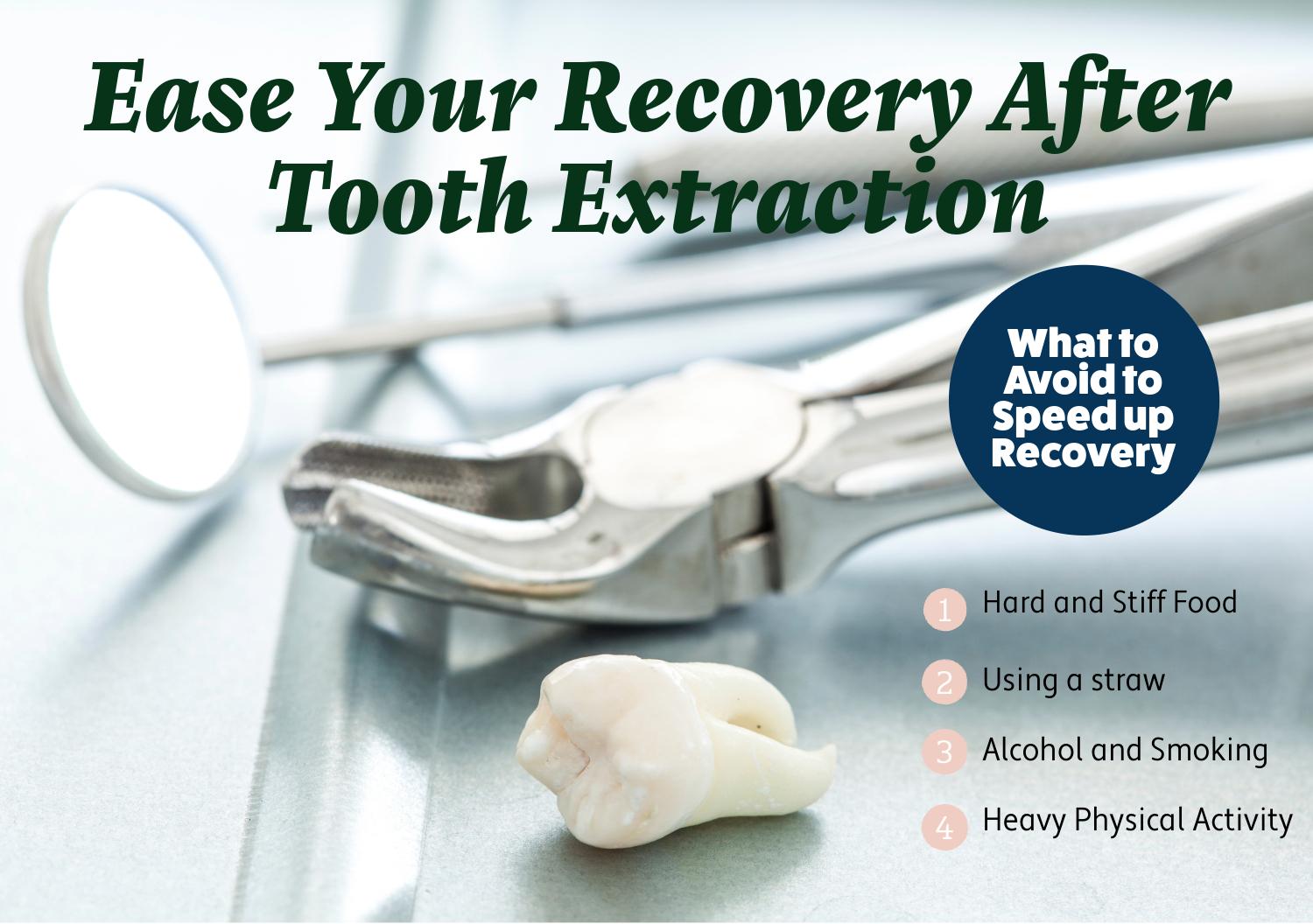
Do not rinse on the first day. You may have read that you should rinse with salt water on the first night. UK guidance says the opposite: avoid rinsing on the day of the extraction6. From the next day, the NHS advises keeping the wound clean by rinsing gently with mouthwash or warm salt water2. Brush your other teeth, but keep away from the socket.
The first 24 hours. Once the bleeding has stopped, SDCEP advises people to avoid alcohol, smoking and exercise for 24 hours1, to keep their head raised if possible and not to disturb the clot.
Smoking. Smoking is linked to dry socket, a painful condition in which the clot is lost. Dry socket is most common after a molar6 has been taken out. A review of 11 observational studies with over 10,000 patients found dry socket in about 13 in 100 smokers and about 4 in 100 non-smokers7. These studies show a link, not proof of cause, and no study has worked out a safe time to start again or a safe number of cigarettes.
Straws. The only study we found, a small one of 60 patients after wisdom tooth removal, saw the same dry socket rate8 with and without straws; it does not say how patients were allocated. That is thin evidence either way. Hard sucking can pull on the clot, so drinking from a glass on the first night is a reasonable precaution.
Pain, swelling and sleep
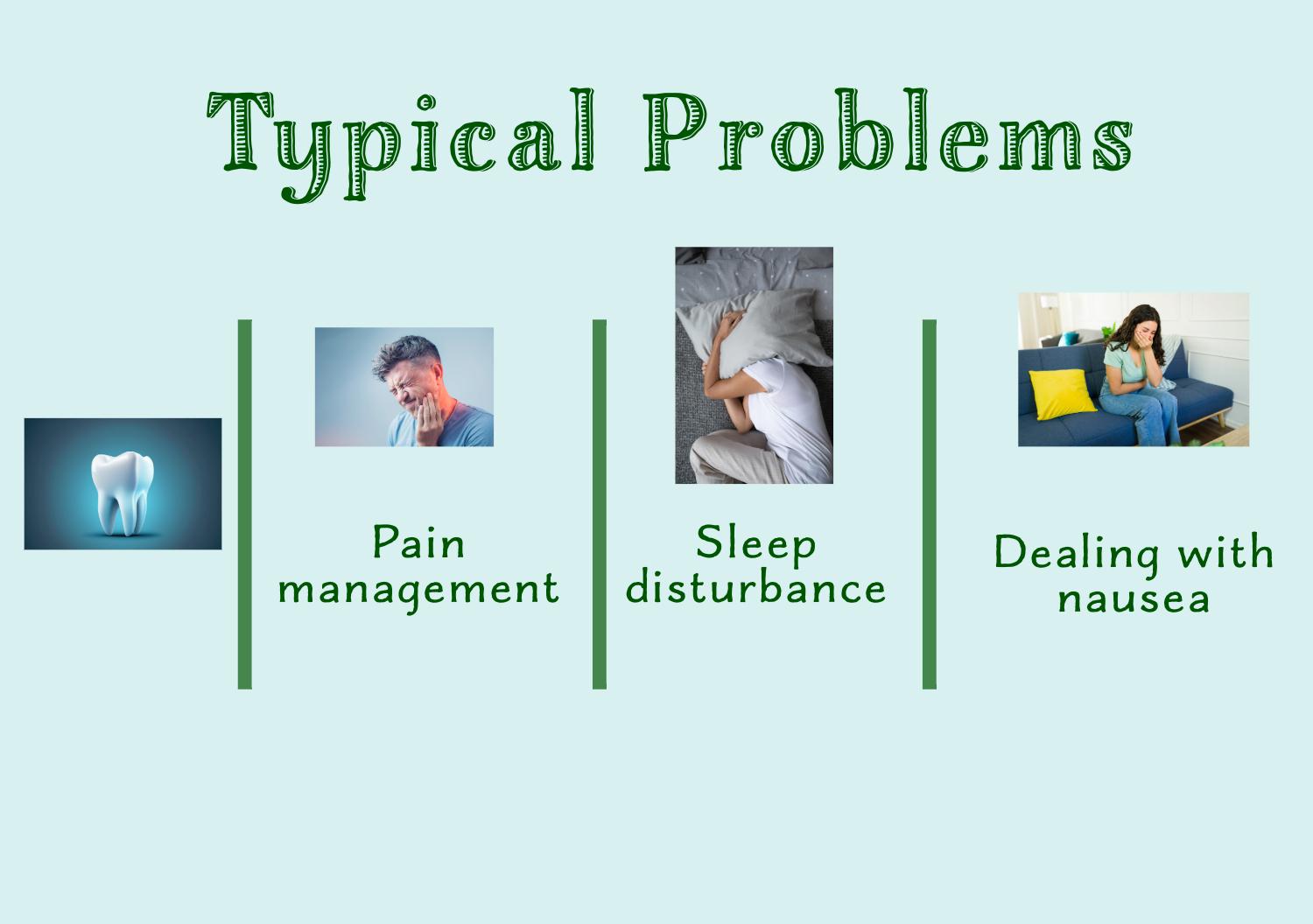
Some pain and swelling is expected. After wisdom tooth removal, the NHS says these can last for up to 2 weeks2 and should start to improve after 1 or 2 days. These figures describe wisdom tooth removal; the sources we found do not give a separate course for other extractions.
Painkillers. The NHS advises paracetamol or ibuprofen. In a Cochrane overview of pain-relief trials, mostly after wisdom tooth removal, ibuprofen combined with paracetamol9 relieved at least half the pain over 4 to 6 hours in almost 70 in 100 people. Follow the pack or your pharmacist on doses, and check with your dentist or doctor first if you take blood thinners or have been told to avoid anti-inflammatories. If you are pregnant, the NHS says to avoid ibuprofen10 unless a doctor or pharmacist advises it. Ask a pharmacist if you have a long-term condition or take other medicines, and do not take two products that both contain paracetamol11.
Cold packs. A cold pack on the cheek may help a little. A review of 6 trials after wisdom tooth surgery found a small reduction in pain on the third day12, no clear effect on swelling, and low-certainty evidence. There is no agreed schedule; wrap it in a cloth.
Sleep. We found no source on the best side to sleep on or how many pillows to use. The only related advice is SDCEP's: keep your head raised if you can. An extra pillow may help.
After sedation or a general anaesthetic. The NHS advises not driving for 24 hours2 after a sedative injection, or for 48 hours after a general anaesthetic.
Eating and drinking on the first night
Wait until the numbness wears off before you eat, so that you do not bite your cheek. Then:
- Soft or liquid food, such as cooled soup, yoghurt or mashed potato. The NHS advises soft or liquid food2 and avoiding hard or crunchy food and food that could get stuck in the wound, such as nuts or seeds.
- Nothing very hot. Very hot drinks are on the NHS list to avoid.
- No alcohol on the first day.
Dairy is often on the list of things to avoid, but two randomised trials in Germany did not detect harm from it after mouth surgery. In one, of healthy young non-smokers having wisdom teeth removed, 3 of 77 people who ate dairy13 and 8 of 80 who avoided it had a complication. A second, broader trial did not detect a difference in wound healing14 either way. Neither trial shows that dairy is safe for everyone.
When to see a dentist
Contact a dentist urgently if:
- The bleeding does not stop after the pressure steps above.
- Pain is severe or getting worse and painkillers are not helping.
- You have pain with a bad taste in your mouth, a high temperature, or you feel unwell. Any one of these is enough. The NHS lists them as signs to get urgent help2 after wisdom tooth removal. We found no source that says a mild fever is normal after an extraction, so do not wait it out.
- Pain starts or gets much worse 1 to 2 days later, with a bad taste or smell and a socket that looks empty. This is the typical pattern of dry socket, and SDCEP advises urgent dental care6.
- Bleeding starts again days later. SDCEP notes that bleeding within a week of an extraction can be a sign of infection.
Emergencies. Call 112 or go to the nearest emergency department if swelling makes it hard to breathe, swallow or speak, or if the area around your eye or your neck swells. The NHS lists these as reasons to go to an emergency department15.
Frequently asked questions
I smoked a cigarette the day after my implant. Will it fail?
Not necessarily. The studies show more implant loss in smokers as a group; they do not predict what happens to one implant. Do not smoke again during healing, follow your aftercare instructions and tell your dentist. Call if pain, swelling or discharge increases.
Is 48 hours without smoking enough?
We have found no study showing that it is. The reviews compared smokers with non-smokers; neither tested a smoke-free period of any length. Smoking is linked to implant loss during healing, which takes months. Your dentist tells you how long to stop.
Can I drink through a straw after a tooth extraction?
The evidence is thin: one small study found no difference in dry socket with straws. Hard sucking can still pull on the clot, so drinking from a glass for the first day or so is a sensible precaution.
When can I smoke after a tooth extraction?
UK guidance advises not smoking for at least 24 hours after the bleeding has stopped. No study has found a safe time to restart. Smokers get dry socket more often, so this is a good moment to ask for help with stopping.
Can an e.max crown be whitened?
No. Whitening does not lighten crowns the way it lightens natural teeth. If you want whiter teeth, tell your dentist before the crown's shade is chosen.
Can I eat normally with veneers?
Mostly, yes. Avoid biting nails, pens, ice or other very hard things with your front teeth, as that raises the risk of chipping. Coffee, tea and smoking can stain the edges over time.
Dt. Dilek AKSU GÜLER
Dentist · Founder
She has completed advanced training in implantology and works in aesthetic restorations and smile design.
Sources
- SDCEP Management of Acute Dental Problems (2nd ed.): Post-extraction haemorrhage. Scottish Dental Clinical Effectiveness Programme (SDCEP). 2026.↩acutedentalproblems.sdcep.org.uk
- NHS: Wisdom tooth removal. NHS (nhs.uk). 2024.↩nhs.uk
- Interventions for treating post-extraction bleeding (Cochrane review, no eligible trials). Cochrane Database of Systematic Reviews 2018;3:CD011930. 2018.↩doi.org
- SDCEP: Post-treatment advice for dental patients taking anticoagulant or antiplatelet medication (patient leaflet). Scottish Dental Clinical Effectiveness Programme (SDCEP), March 2022. 2022.↩sdcep.org.uk
- SDCEP: Anticoagulant or antiplatelet medication and your dental treatment (information for patients). Scottish Dental Clinical Effectiveness Programme (SDCEP), March 2022. 2022.↩sdcep.org.uk
- SDCEP Management of Acute Dental Problems (2nd ed.): Alveolar osteitis (dry socket). Scottish Dental Clinical Effectiveness Programme (SDCEP). 2026.↩acutedentalproblems.sdcep.org.uk
- Smoking as a risk factor for dry socket: a systematic review (11 observational studies). Dentistry Journal (Basel) 2022;10(7):121. 2022.↩doi.org
- Straws do not cause dry sockets when third molars are extracted (single small comparative study). Journal of the Michigan Dental Association 2012;94(7):46-51. 2012.↩pubmed.ncbi.nlm.nih.gov
- Non-prescription (OTC) oral analgesics for acute pain: an overview of Cochrane reviews. Cochrane Database of Systematic Reviews 2015;(11):CD010794. 2015.↩doi.org
- Ibuprofen for adults: pregnancy, breastfeeding and fertility. NHS (nhs.uk), page last reviewed 27 August 2025. 2025.↩nhs.uk
- SDCEP Drug Prescribing for Dentistry: Odontogenic pain. Scottish Dental Clinical Effectiveness Programme (SDCEP).↩sdcepdentalprescribing.nhs.scot
- Cryotherapy in reducing pain, trismus, and facial swelling after third-molar surgery: systematic review and meta-analysis (6 RCTs). Journal of the American Dental Association 2019;150(4):269-277. 2019.↩doi.org
- Influence of milk and dairy products on wound healing after wisdom teeth removal: a prospective clinical study. BMJ Nutrition, Prevention & Health 2026;9(1):e001432. 2026.↩doi.org
- Impact of postoperative dairy consumption on oral wound healing: critical analysis from a prospective, randomized and controlled trial. Head & Face Medicine 2025;21(1):40. 2025.↩doi.org
- NHS: Toothache. NHS (nhs.uk). 2024.↩nhs.uk